Blog
Resellers: Pallet Lot Sizes Mapped to 50–1,000 Units

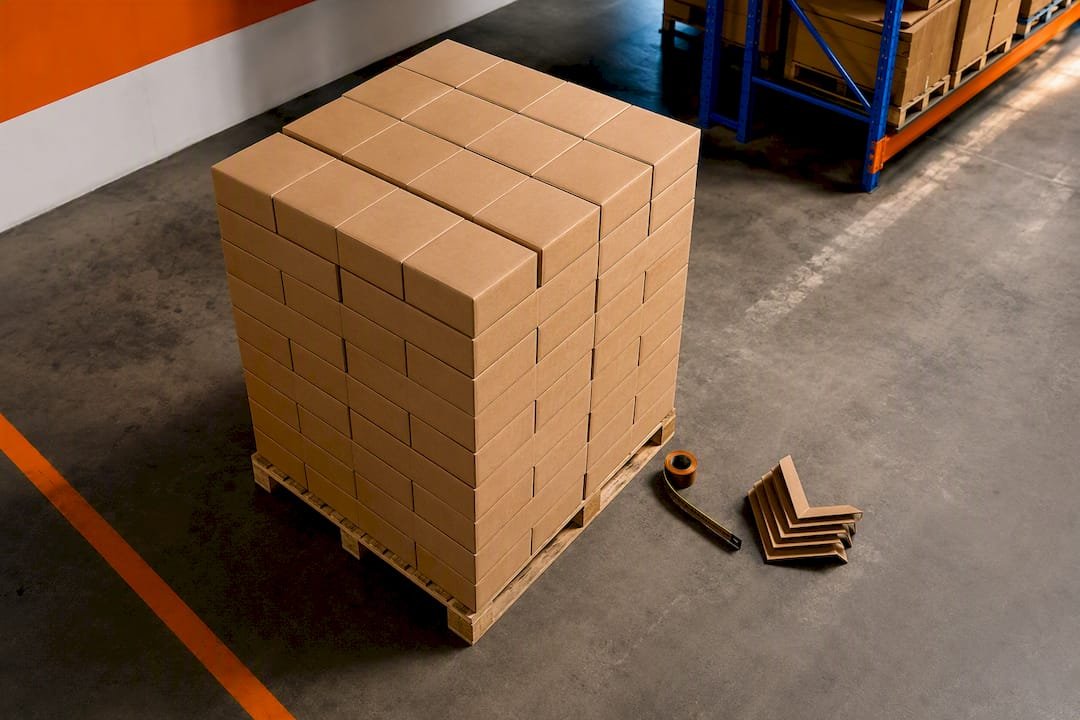
Pallet lot sizes describe how liquidation and wholesale inventory gets grouped and sold, ranging from a single pallet to a full truckload. A single pallet holds one unit stack, a half-pallet roughly half that footprint, LTL (less-than-truckload) typically runs 1 to 6 pallets (occasionally listed up to 12), and FTL (full truckload) usually means about two dozen pallets. Most counts are built around the standard 48×40 inch pallet footprint, which is why that single number shapes almost every lot-size calculation you’ll run into.
TL;DR:
- Pallet lot sizes range from single pallets to full truckloads, with standard dimensions mostly based on 48×40 inch pallets in North America.
- Shipping costs depend on pallet count versus pallet spaces, so confirm whether listings specify them, especially for oversize or overhanging loads.
- The number of units on a pallet varies widely; grocery pallets can hold 400-800 units, while electronics pallets typically carry 50-70 items.
- Choosing the right lot size depends on your processing capacity, storage space, capital risk tolerance, and handling requirements for specific categories.
- Always verify manifest details, freight options, and delivery access before purchasing to avoid costly surprises at delivery.
Table of Contents
- What Are the Common Pallet Lot Types?
- What Are the Standard Pallet Dimensions Worldwide?
- How Many Pallets Fit on a Truck or in a Container?
- How Many Units Are Actually on a Pallet?
- How Do You Choose the Right Pallet Lot Size?
- How Do Mega Pallets Liquidation’s Lots Match These Categories?
- What Rules of Thumb Actually Work for New Buyers?
- Ready to Order? Start With the Right Lot Size
- Sources
What Are the Common Pallet Lot Types?
Every liquidation listing you browse uses a handful of standard lot categories, and knowing the difference keeps you from overpaying for freight or underestimating inventory.
- Single pallet: One stacked or shrink-wrapped load on a standard footprint, the entry point for testing a new product category.
- Half-pallet: Roughly half the footprint or height of a full pallet, often used for smaller test buys or in-store display quantities.
- LTL (less-than-truckload): Marketplace convention typically caps this at a handful of pallets, though some sellers stretch listings higher (https://bstock.com/blog/buying-basics-b-stock-lot-sizes/).
- FTL / truckload: A full trailer, generally landing at roughly two dozen pallets depending on product density and stacking method.
- Floor-loaded: Merchandise packed directly into a trailer or container without pallets, common for large appliances or oddly shaped freight that wastes space on a pallet base.
Listings also distinguish manifested loads (an itemized breakdown of what’s inside) from unmanifested loads (a category description without a SKU-level list). Manifested lots cost more per pallet but remove guesswork. Unmanifested lots are cheaper but require you to trust the seller’s general description and photos.
What Are the Standard Pallet Dimensions Worldwide?
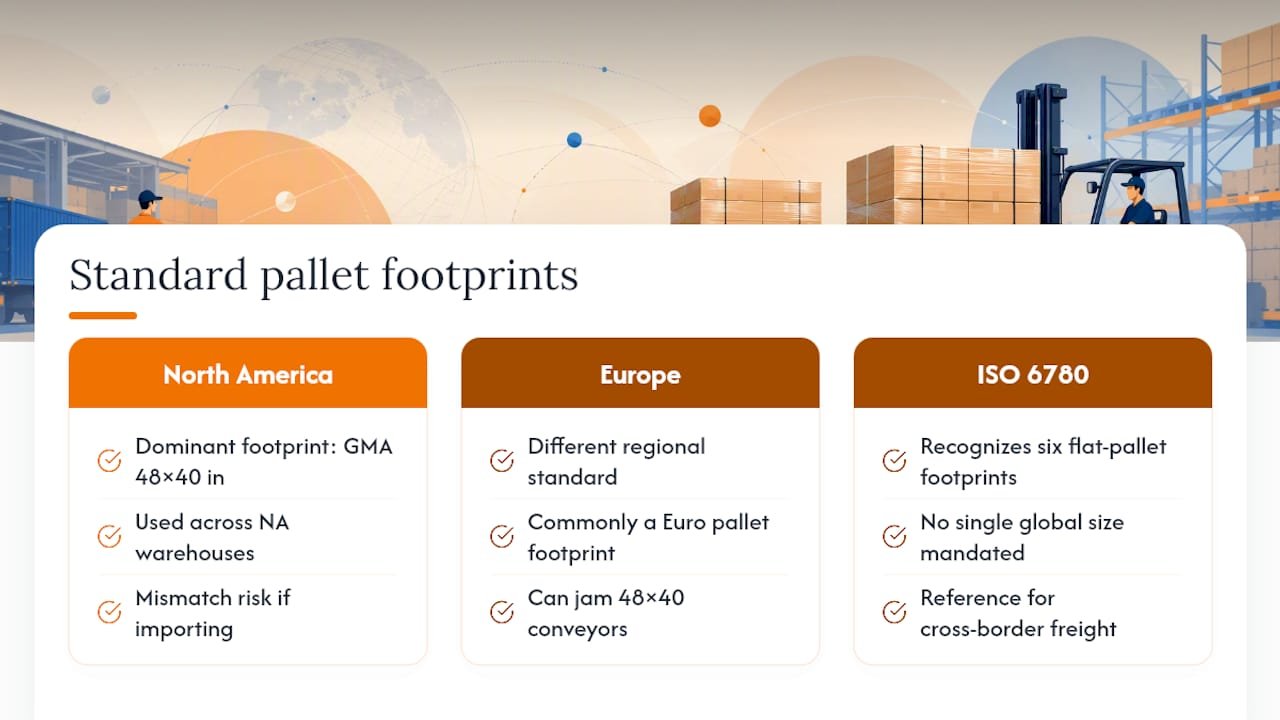
The footprint underneath your inventory determines how it racks, ships, and stacks, and it varies more by region than most first-time buyers expect. The GMA 48×40 inch pallet dominates North American warehouses, while Europe runs on a different standard entirely.
ISO 6780:2003 recognizes six flat-pallet footprints total, and there’s no single global standard binding every country to one size. That matters if you ever import cross-border freight: a Euro pallet loaded onto a domestic rack built for 48×40 can jam a conveyor or waste vertical racking space, forcing a costly repalletizing step before it ever reaches your floor.
How Many Pallets Fit on a Truck or in a Container?
Freight capacity is where pallet math actually costs or saves you money, and it comes down to two different numbers: how many pallets physically fit, and how many pallet spaces they consume.
- 53-foot dry van: About 26 GMA pallets in standard double rows, up to roughly 30 with pinwheel loading.
- 48-foot dry van: Holds about two dozen standard pallets.
- 20-foot ocean container: Holds approximately a dozen GMA pallets.
- 40-foot ocean container: Holds around two dozen GMA pallets.
A pallet space isn’t always one pallet. Carriers price LTL freight by the floor area a load occupies, not strictly by pallet count. An oversized skid or overhanging load can eat two pallet spaces instead of one, which changes your quoted rate without changing your actual pallet count. Always confirm whether a listing quotes pallet count or pallet spaces before you book transport. Delivery access matters just as much: a dock-equipped warehouse can unload standard freight in minutes, while a residential address usually needs a liftgate truck, and floor-loaded shipments almost always require one plus a pallet jack on hand.
How Many Units Are Actually on a Pallet?
Pallet count only tells you half the story. The other half is packing method, and that’s where two identical-looking pallets can hold wildly different unit counts.
A gaylord box (a large corrugated bulk bin) crams small, low-value items tight, pushing unit counts high. Stacked-and-wrapped pallets of boxed goods, by contrast, leave more air between cartons and naturally hold fewer pieces. Case pack size drives the rest: a case of 24 phone cases behaves nothing like a case of 6 kitchen appliances, even stacked on the identical 48×40 footprint.
Real-world ranges look like this:
- Grocery pallets: Roughly 400 to 800 consumer units, depending on case size and how tightly the pallet is packed.
- Mixed books pallets: Can approach 900 to 1,000 books per pallet, since books stack dense and uniform.
- Mixed electronics pallets: Typically just 50 to 70 items, because electronics carry bulkier packaging and higher per-unit value.
- Toy pallets: Around 200 units on average, landing between grocery density and electronics bulk.
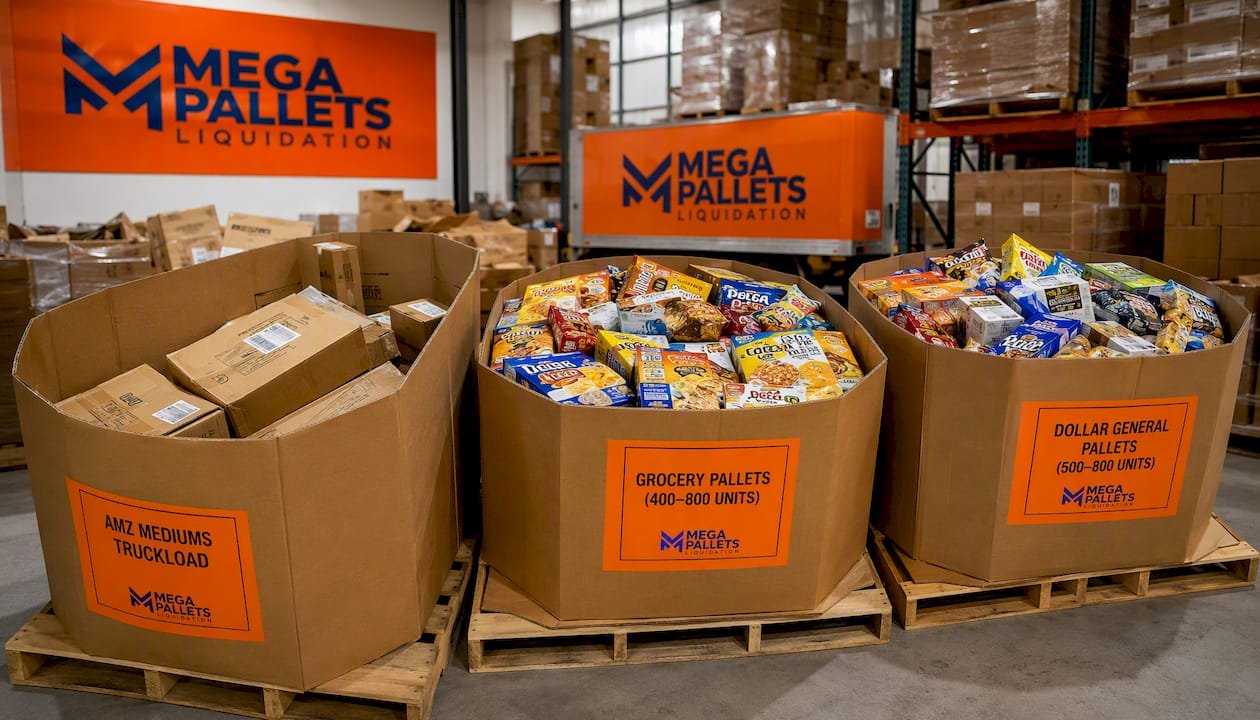
Megapalletsliquidation’s own AMZ MEDIUMS Truckload and Dollar General Pallets listings map directly onto these patterns: truckload-scale Amazon returns skew toward mixed general merchandise counts, while Dollar General lots sit closer to the grocery-density range.
Pro Tip: Estimate on the low end of any seller’s stated unit range until you’ve confirmed the exact count with a manifest or photos. It’s easier to be pleasantly surprised than to overbuy shelf space you don’t need.
How Do You Choose the Right Pallet Lot Size?
Matching lot size to your actual operation prevents the two most expensive mistakes in this business: buying more than you can process, or buying too little to make freight worthwhile.
- Check your processing throughput. If you can list and photograph 30 items a day, a 24-pallet truckload will sit in your garage for months.
- Measure your storage footprint. A single pallet needs about 32 square feet of clearance to unload and sort; a truckload needs a real warehouse or dock.
- Match capital to risk tolerance. Starting with one pallet validates sell-through and handling before you commit real money to LTL or FTL volume.
- Confirm SKU handling needs. Mixed electronics need testing stations; grocery pallets need date-code checks. Know your labor cost per category.
- Ask the seller direct questions before buying: Is this manifested or unmanifested? What’s the exact pallet count versus pallet spaces? Are photos current? What are the freight options and return policy?
Pro Tip: Ask the seller to confirm pallet count and pallet spaces on the manifest itself. Sellers who dodge that question, skip real photos, or bury hazardous-item disclosures in fine print are the biggest red flags in this business.
How Do Mega Pallets Liquidation’s Lots Match These Categories?
Every lot type covered above shows up directly in Megapalletsliquidation’s catalog, which makes it a useful reference point rather than an abstract exercise.
- AMZ MEDIUMS Truckload fits buyers with dock access and real processing capacity, priced at the FTL scale with mixed Amazon-return manifests.
- Grocery Pallets run 400 to 800 units, ideal for resellers testing consumable and household categories at pallet or light-LTL scale.
- Dollar General Pallets land in the 500 to 800 unit range, a solid mid-size entry point for general merchandise resellers.
Check the full pallet catalog or review how ordering works before committing to your first lot.
What Rules of Thumb Actually Work for New Buyers?
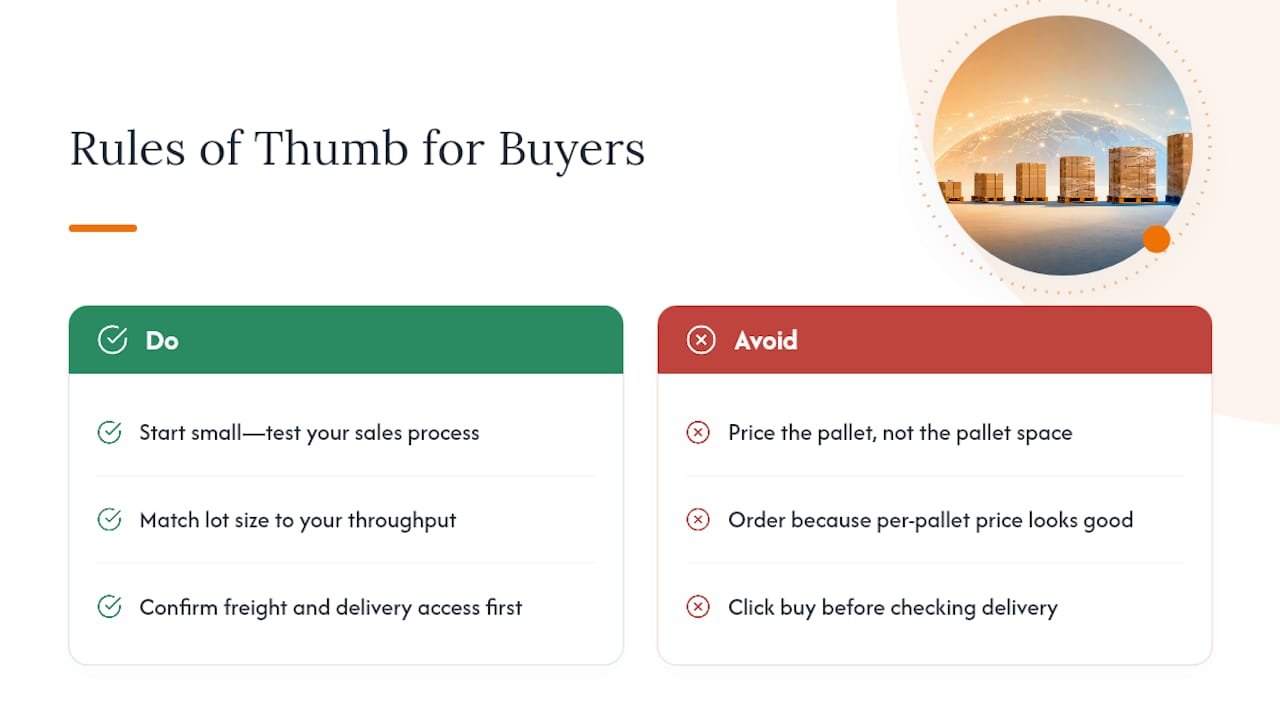
Three habits separate resellers who scale from resellers who get stuck holding dead inventory. First, start small: your first order should test your sales process, not your bank account. Second, match lot size to throughput, never to how good a per-pallet price looks in isolation. Third, confirm freight cost and delivery access before you click buy, not after the truck shows up at a residential address without a liftgate.
I’ve spent years watching resellers make the same freight-math mistake: they price the pallet, not the pallet space, and get blindsided at delivery. Browse the full catalog or check the about page before your next order.
— Nene
Ready to Order? Start With the Right Lot Size
Megapalletsliquidation is the direct source for the exact lot types this guide just walked through, no third-party markup and no guessing about what’s actually on the pallet. If you’ve got dock access and real throughput, the AMZ MEDIUMS Truckload gets you FTL-scale volume with mixed Amazon-return inventory. If you’re testing grocery and household categories, Grocery Pallets deliver that 400 to 800 unit range at pallet or light-LTL scale. And for a general merchandise mix that lands mid-range on unit count, Dollar General Pallets run 500 to 800 units per lot.
Review the manifest details on any listing before you buy, or reach out to the sales team with questions about freight and delivery access for your specific setup.
Sources
Recommended
- Grocery Pallets Wholesale Mixed : Unbeatable Bulk Food & Household Essentials
- Wholesale DVD Pallet – Mixed Movies & TV Series Bulk Media (1,000–2,000 Units) DVD Pallet For Sale
- Wholesale Kids Toys Pallets: Unbeatable Brand-New Toy Lots (200 Units) Mixed Holiday Decor & Seasonal Gift Lots
- Wholesale Mixed Books Liquidation Pallets (900–1,000 Books per Pallet) Mixed Books Liquidation Pallets For Sale