Blog
Turn One Manifested Pallet Into Profit on eBay for Resellers


Yes, reselling liquidation on eBay works when you can inspect, test, and list inventory item by item instead of dumping a pallet “as-is.” Start with one manifested pallet from a source like Mega Pallets Liquidation, calculate your landed cost per item, and price your top pieces from eBay’s sold listings before you commit to buying more. Skip that discipline and fees, returns, and dead stock will eat your margin.
TL;DR:
- Sourcing manifested pallets allows accurate estimation of resale value and reduces the risk of dead stock, unlike unmanifested lots that contain unpredictable filler.
- Processing involves sampling 5-10% of the pallet first, testing functional items, grading honestly, and photographing defects before creating listings.
- Pricing should be based on actual sold listings and subtract real costs, including fees, shipping, labor, and returns reserve, to protect profit margins.
- Tracking key metrics like sell-through rate, inventory aging, and returns reserve helps manage cash flow and avoid dead stock.
- Using clear documentation, conservative condition listings, and proper category restrictions minimizes eBay account risk when reselling liquidation inventory.
Table of Contents
- What Liquidation Lots Look Like Inside the Box
- Where to Source Liquidation Inventory Built for eBay
- How to Process a Pallet Before You List Anything
- Pricing and Listing Strategy That Protects Your Margin
- Shipping, Returns, and the Numbers You Need to Track
- Risks, Restricted Items, and Staying Off eBay’s Radar
- How Mega Pallets Liquidation Fits the Workflow
- When Liquidation on eBay Scales, and When It Doesn’t
- Start Your Pilot Pallet With Mega Pallets Liquidation
- Sources
What Liquidation Lots Look Like Inside the Box
The word “liquidation” covers everything from a fully itemized Amazon return pallet to a mystery box of unsorted junk, and the gap between those two matters more than almost anything else you’ll decide as a reseller. A manifested pallet comes with a line-by-line list of what’s inside: brand, model number, quantity, and often the original retail price. An unmanifested pallet (sometimes called a mystery or blind pallet) gives you none of that. You’re buying weight and guesswork.
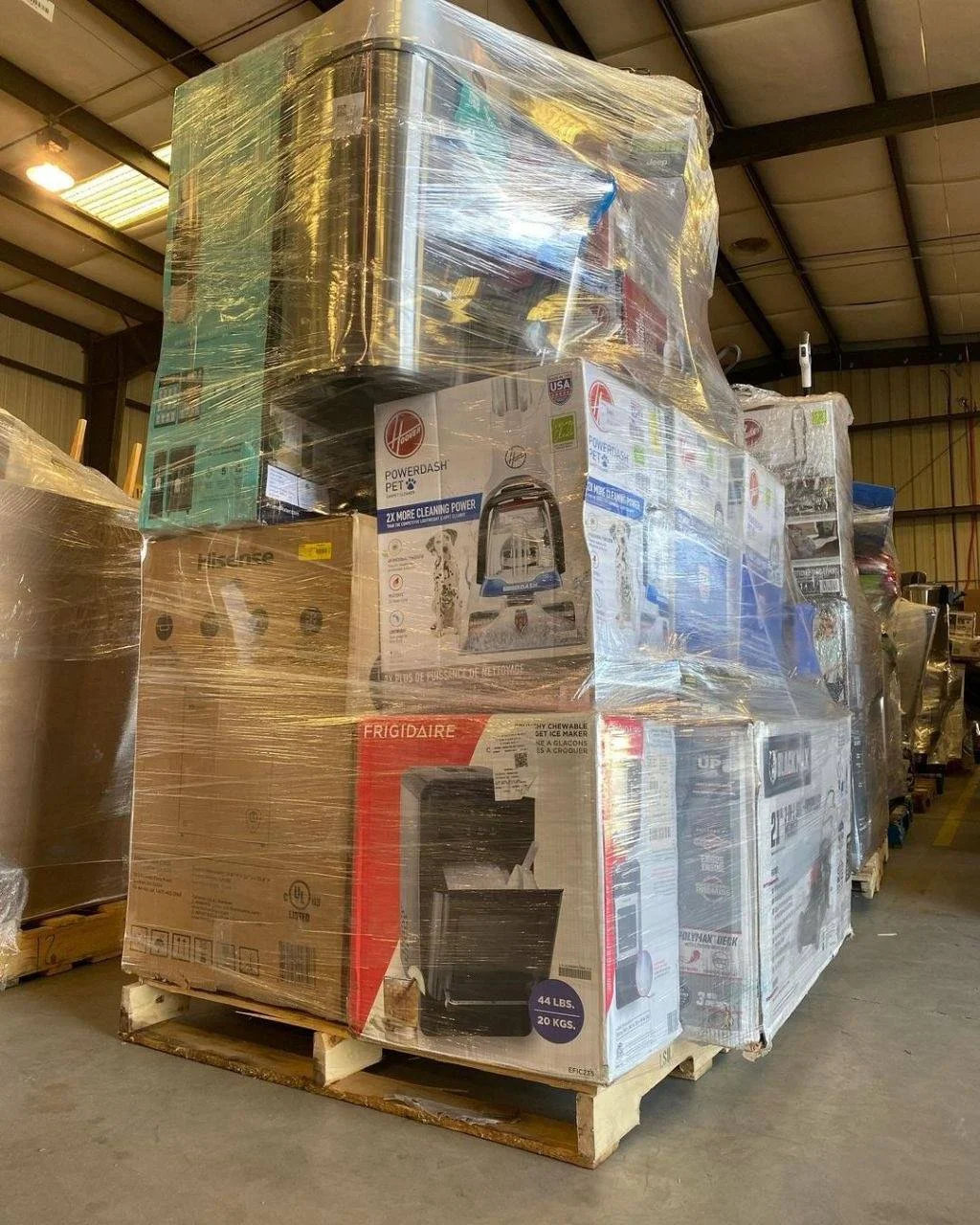
That distinction changes your entire operation before you even open a box. Manifested lots let you estimate expected recovery ahead of purchase, because you can check comparable sold prices for each listed item before you buy. Unmanifested lots are cheaper per pound, but community sourcing guides note they carry a heavy load of non-resellable filler, and buyers who don’t already know how to grade inventory fast tend to lose money on them.
Inside a typical mixed retail-return pallet, expect a spread that looks something like this:
- New or like-new, still sealed or with tags attached, usually a significant minority of a pallet depending on the retailer.
- Open-box or shelf-pull, functional but missing original packaging.
- Used, customer-returned, which may work perfectly or may have a defect that caused the original return.
- Parts-only or non-functional, items you sell for salvage value or scrap.
The condition mix drives everything downstream. A pallet skewed toward new and like-new items sells faster and at higher prices, but usually costs more upfront. A pallet with heavy used and parts-only content is cheaper to buy but demands more testing hours and produces a lower sell-through rate. Budget your time accordingly: sorting and grading a standard 40 to 50 item mixed pallet typically takes a full day for one person working alone, sometimes two if electronics need power-on testing.
Where to Source Liquidation Inventory Built for eBay
Not every liquidation channel is built for a reseller who plans to list items individually on eBay. Some are built for bulk buyers who resell whole lots to flea market vendors or export brokers, and buying from the wrong channel means paying eBay-adjacent prices for inventory you can’t grade or trust.
The main channels worth knowing:
- Liquidation marketplaces and wholesalers that sell manifested pallets directly, often organized by category (electronics, tools, general merchandise) so you can specialize.
- Brokers who buy truckloads from retailers and break them into smaller pallet lots, usually at a markup but with more flexible minimum order sizes.
- Direct retailer return programs, where big-box retailers sell their customer returns and overstock through dedicated liquidation portals.
- Auctions, both online liquidation auction sites and local warehouse auctions, where pricing is competitive but manifests are sometimes thinner.
- Thrift and estate sales, a slower but lower-risk sourcing method for resellers who want single items rather than pallet volume.
Before you wire money to any supplier, vet them the way you’d vet a wholesale partner, because that’s exactly what they are. Ask for the manifest in writing, request real photos of the actual lot (not stock photos), and ask for shipping or FOB terms so you know who’s responsible for freight damage. If they’ve sold to resellers before, ask for a reference.
Pro Tip: Cross-check a few manifest line items against eBay’s sold listings before you buy. If the seller’s claimed retail value doesn’t roughly match what those items actually sell for, walk away. That mismatch is the most common way new resellers overpay.
Watch for these red flags, any one of which should slow you down:
- No manifest offered, or a manifest offered only after you ask twice.
- A vendor with no verifiable business history, reviews, or physical address.
- Refusal to provide sample photos of the specific lot you’re buying.
- Retail value claims that seem inflated compared to sold-listing prices you can check yourself.
How to Process a Pallet Before You List Anything
Processing is where liquidation reselling either becomes a business or becomes a garage full of regret. The workflow below applies whether you’re working an Amazon return pallet or a mixed general merchandise lot.
- Sample first. Pull 5% to 10% of the pallet and grade it before committing hours to the whole thing. This tells you fast whether the lot matches its manifest.
- Unpack and sort by category. Group electronics, apparel, tools, and miscellaneous separately so you can batch similar testing tasks.
- Test functional items. Power on electronics, check for missing parts on tools and appliances, and inspect apparel for stains, tags, or damage.
- Grade each item honestly using a simple taxonomy: New, Open Box, Used Excellent, Used Fair, or For Parts. Write the exact condition language you’ll use in the eBay listing while the item is in front of you.
- Photograph immediately after grading, including any flaws, since photos taken later rarely capture defects as accurately.
- Assign a SKU and list your highest-value items first, since those recover your pallet cost fastest.
For eBay’s item specifics field, be specific rather than generic. “Used Excellent, tested and powers on, minor scuff on left corner, original charger included” tells a buyer far more than “Used, good condition,” and it protects you if a return dispute comes up later.
Keep a simple testing log, even a spreadsheet, noting what you tested, when, and the result. Resellers who document this consistently report fewer disputes when eBay’s buyer protection process gets invoked, because they have a paper trail showing the item worked when it shipped.
Testing checklist by category:
- Electronics: power on, check ports, test included accessories, note battery health if applicable.
- Tools: check for missing bits or attachments, test motor function, inspect cords.
- Books: check for water damage, missing pages, and edition/ISBN accuracy.
- Apparel: check for stains, odors, and size tag accuracy against the actual garment.
One insight worth building your whole intake process around: checking eBay’s own sold listings before you even buy a pallet is close to the best price signal available to a reseller, closer than any retail-value estimate a liquidation vendor hands you.
Pricing and Listing Strategy That Protects Your Margin
Price from sold listings, not from the manifest’s stated retail value and not from active competitor listings that haven’t actually sold anything. Search the exact model number or ISBN, filter to sold items, and take the median of the last 10 to 15 comparable sales. That’s your realistic ceiling.
From that number, subtract every real cost before you decide the price is worth listing at:
- eBay’s final value fee, which applies to the total sale price including shipping.
- Payment processing costs built into eBay’s managed payments system.
- Actual shipping cost, not an estimate. Weigh and measure the item before you list.
- Packaging materials, especially for anything fragile.
- Your own labor time for testing, photographing, and listing.
- A returns reserve, typically a moderate percentage of expected revenue, held back to absorb the buyer-protection claims that are common with liquidation-sourced items.
Only after all of that comes out should you compare what’s left against what you paid per unit for the pallet.
Your listing itself needs to earn the sale honestly. Use exact model identifiers in the title (model number, size, color) since that’s how buyers search and how eBay’s algorithm matches queries. Describe condition plainly, and never use a brand name in a way that implies you’re an authorized dealer or that the item is new when it’s a used return. Misleading brand keywords and inaccurate condition claims are among the most common reasons liquidation sellers get flagged.
Pro Tip: List your highest-value, most photogenic items as Buy It Now with a firm price based on sold comps. Save auction-style listings for items where demand is uncertain and you want the market to tell you what something is actually worth.
For low-value items where individual listing labor exceeds the likely profit, consider bundling into small lots instead of listing solo. A handful of paperback books rarely justifies eight photos and a solo listing each; a bundled lot of 10 by genre often sells faster than eight scattered singles.
Shipping, Returns, and the Numbers You Need to Track
Weigh and measure every item before you list it, not after a buyer pays. Shipping cost surprises are one of the fastest ways a profitable-looking sale turns into a loss, especially on bulkier items like tools or kitchen appliances. Standard flat-rate boxes work well for small electronics and books, while irregular items usually need dimensional weight calculated in advance.
Use eBay’s own shipping labels where possible. The carrier discounts built into the platform are usually better than retail counter rates, and tracking integrates automatically with the order, which matters when a buyer disputes delivery.
On returns, eBay’s Money Back Guarantee means buyers have real protection, and liquidation-sourced inventory generates more disputes than new retail stock simply because condition variance is higher. Build a returns reserve into your pricing math rather than treating returns as a surprise expense.
Core numbers to track per pallet:
- Landed cost per item (pallet price plus freight, divided by usable units).
- Labor hours spent testing, photographing, and listing.
- Sell-through rate (percentage of items sold within 60 to 90 days).
- Inventory aging (how long unsold items have sat).
| Metric | Why it matters | Rough target |
|---|---|---|
| Returns reserve | Buffers buyer-protection disputes | a moderate share of revenue |
| Sell-through rate | Signals whether the category is worth repeating | a strong majority within a few months |
| Inventory aging | Flags dead stock before it ties up cash | Review anything past 90 days |
Risks, Restricted Items, and Staying Off eBay’s Radar
Some categories carry disproportionate account risk relative to their profit potential, and liquidation pallets sometimes include them without warning. Counterfeit-prone goods (designer apparel, branded electronics accessories, licensed merchandise) draw scrutiny even when your unit is genuine, because you often can’t prove chain of custody. Used cosmetics, certain battery types, and other regulated items carry their own restrictions.
The most common way sellers get flagged has nothing to do with the product itself and everything to do with how it’s described. Inaccurate condition labeling, brand names used in a way that implies authorized dealer status, and photos that don’t match the actual item are the recurring triggers reseller communities point to again and again.
Build a compliance habit into your intake process:
- Keep the original manifest and any vendor invoice on file for every pallet.
- Photograph testing results, especially for electronics, so you have proof of function at time of sale.
- Describe condition conservatively. It’s better to under-promise and over-deliver.
- Respond to buyer messages and disputes quickly. Slow response times compound small problems into account strikes.
How Mega Pallets Liquidation Fits the Workflow
Manifested pallets solve the biggest risk in this entire business model: not knowing what you’re buying. Mega Pallets Liquidation organizes inventory by category, ships nationwide, and provides the manifest detail resellers need to estimate recovery before checkout.
A practical way to start: buy one Amazon Bulk Liquidation Pallet, sample about 5% of it immediately, then fully process your 10 highest-value items first.
- Organized categories reduce blind-buying risk compared to unmanifested lots.
- Nationwide shipping options simplify sourcing without regional pickup logistics.
- Reseller-focused support helps first-time buyers interpret manifests and plan a pilot purchase.
When Liquidation on eBay Scales, and When It Doesn’t
Scaling past your first few pallets is a math decision, not a confidence decision. If either number is shaky, more volume just multiplies the problem.
The mistakes I see most often are blind buying unmanifested lots hoping for a jackpot, setting returns reserves too low because early sales went smoothly, and underestimating labor hours until burnout sets in. eBay stays the right channel as long as you can personally test and grade what you sell. Once volume outpaces your inspection capacity, auction liquidation or B2B lot resale becomes the more honest option, even if the margin per unit looks smaller on paper.
— Nene
Start Your Pilot Pallet With Mega Pallets Liquidation
Megapalletsliquidation gives you what the sourcing channels discussed above can’t always guarantee: a manifest you can check against sold listings before you spend a dollar. That’s the single advantage that turns liquidation reselling from a gamble into a repeatable process.
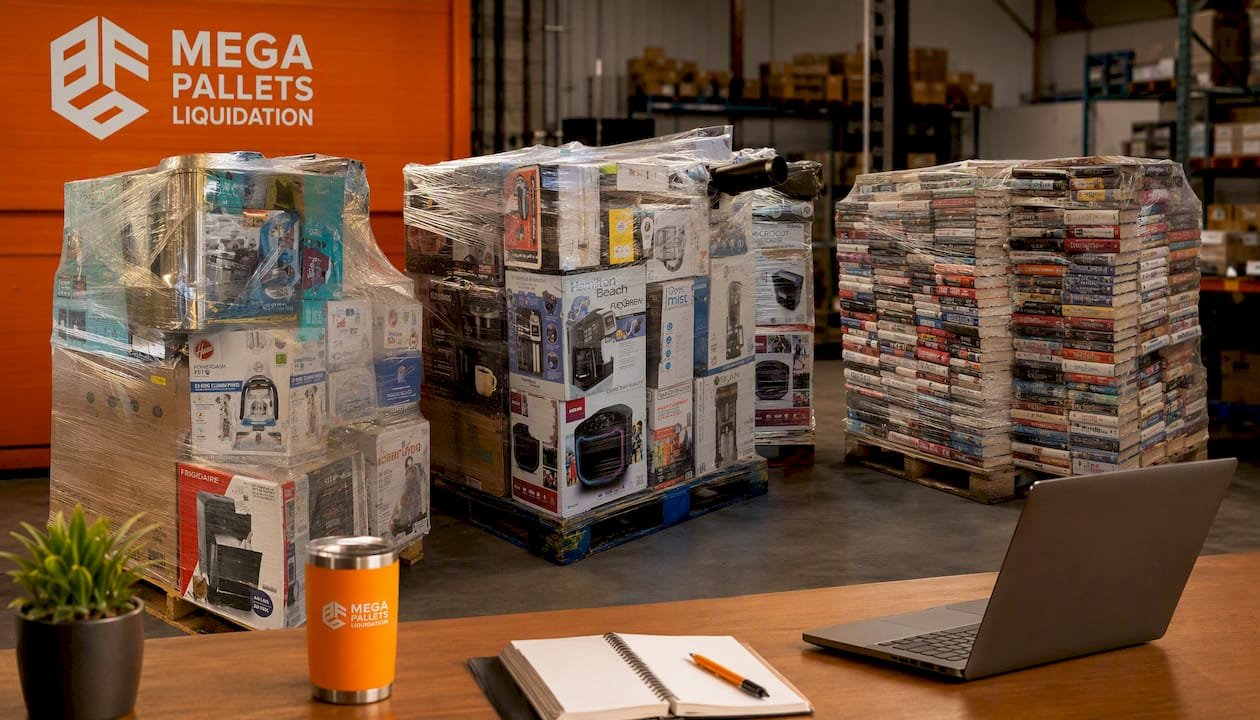
The three product lines built for exactly the workflow covered in this guide:
- Amazon Bulk Liquidation Pallets for resellers who want general merchandise variety and fast individual listing potential.
- Mixed Electronic Pallets for sellers focused on higher-ticket items worth the extra testing time.
- Mixed Books Liquidation Pallets, roughly 900 to 1,000 books per pallet, for sellers who want low shipping costs and steady bundle sales.
Pick one pallet, follow the sampling and grading steps above, and measure your real numbers before you buy a second one. Check the full pallet catalog and place your first order today.
Sources
- Eurosaleonline
- How to Sell Liquidation Stock on eBay Safely in 2026
- eBay sourcing inventory: estate sales to liquidation, 2026 | ShopAppy
Recommended
- 5 Pallet Resale Mistakes New Resellers Make & How to Avoid Them
- Mixed TOYS Pallet – High-Demand, Family-Friendly Inventory with Excellent Resale Potential
- Wholesale General Merchandise Pallets: Unbeatable Resale Value & Variety
- Shop Liquidation Pallets | 100+ Unbeatable Wholesale Pallet Deals | Liquidation Pallets For Sale