Blog
Resellers: Start With One Mixed Gaylord When Buying Book Pallets

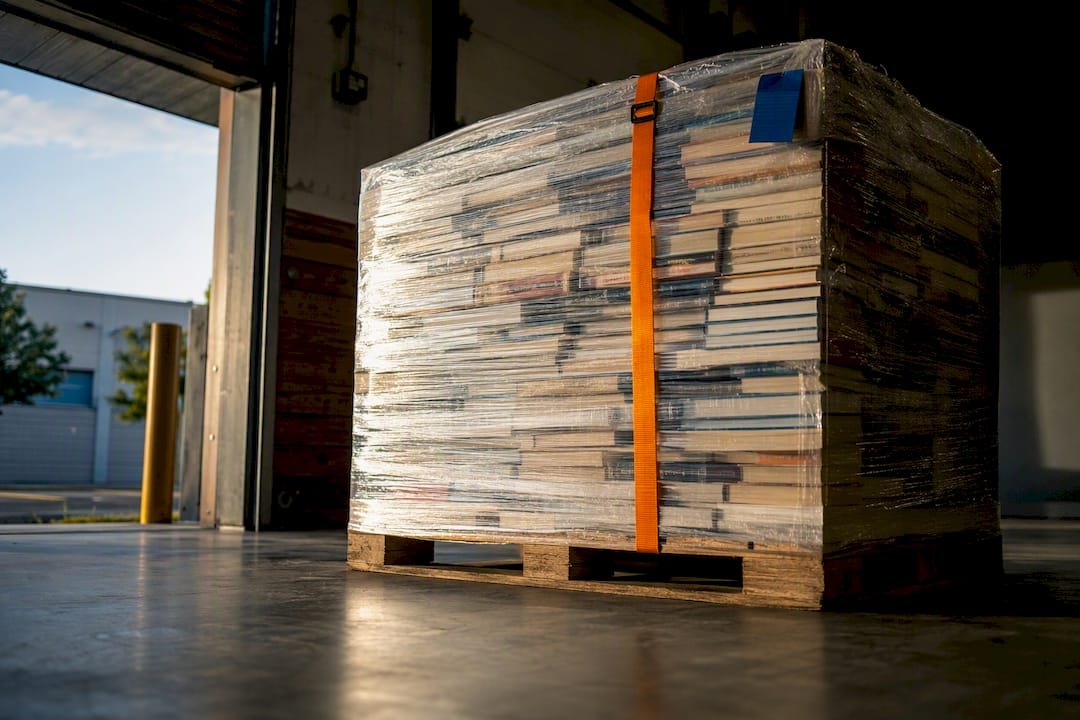
Start with one mixed liquidation book pallet before you commit to anything larger. It limits your risk while you learn how a supplier grades condition and packs freight. Some wholesale suppliers sell a mixed-books option built for exactly this test run. Expect to pay roughly $1,000 to $2,000 for a gaylord depending on manifest and condition, and budget separately for freight, which can add meaningfully to your per-book cost.
TL;DR:
- Start with a mixed, unmanifested pallet costing around $1,000 to $2,000 to minimize risk and learn how the supplier grades condition and packs freight.
- For first-timers, a gaylord holds approximately 900 to 1,000 titles, with freight costs potentially adding several cents per book depending on distance.
- Vet suppliers by requesting a manifest, real photos, condition standards, and clarifying freight and return policies before committing.
- Expect delivery to take from several days to a couple of weeks, and inspect pallets thoroughly upon arrival for damage or mislabeling.
- Test with one pallet, track sell-through and margins, then scale up only after consistent profitability to avoid overestimating sorting capabilities and freight estimates.
Table of Contents
- What Types of Book Pallets Should You Buy First?
- How Many Books Come on a Pallet, and What Does It Cost?
- How Do You Vet a Book Pallet Supplier Before You Pay?
- What Should You Expect From Shipping and Delivery?
- How Do You Test a Pallet and Know When to Scale Up?
- How Does Mega Pallets Liquidation Support First-Time Buyers?
- What Should You Check Before You Commit to a Pallet?
- How Long Does It Take From Order to Delivery?
- What Are Your Options If a Pallet Arrives Damaged or Misrepresented?
- Why the “Just Buy Bigger” Advice on Book Pallets Is Backwards
- How Do You Order a Test Pallet From Mega Pallets Liquidation?
- Where Can You Learn More About Pallet ROI and Resale Channels?
- Sources
What Types of Book Pallets Should You Buy First?
Not every “book pallet” means the same thing, and the differences change your labor cost more than your purchase price does.
- Mixed, unmanifested pallets — no title-by-title list, lowest price per pallet, but you sort through everything yourself to find resale value.
- Sorted or graded pallets — pre-separated by condition or genre, priced higher, less time spent triaging.
- Pre-scanned, FBA-ready pallets — sellers have already checked titles against Amazon’s catalog and flagged what’s eligible to list, which cuts your research time dramatically but raises the price tag.
- Gaylords vs. pallets vs. truckloads — a gaylord is a large cardboard box on a pallet base, a standard pallet is smaller and easier to store, and a truckload is several pallets bundled for volume buyers.
Unmanifested mixed pallets reward buyers with time and shelf space to sort. Pre-scanned or sorted lots suit sellers who’d rather pay more upfront than spend a weekend cataloging boxes. Buyers new to bulk book sourcing should also know that new-book bulk wholesalers, which sell fresh copies with title minimums for schools and nonprofits, operate under completely different terms than liquidation suppliers selling mixed used inventory to resellers.
How Many Books Come on a Pallet, and What Does It Cost?
A gaylord typically holds 800 to 1,000 pounds of books, which for mixed paperbacks and hardcovers usually works out to roughly 900 to 1,000 individual titles. That’s the standard starter unit most resellers order first.
Pricing depends on three variables: category mix, condition grading, and whether the pallet is manifested.
- Unmanifested mixed pallets generally run cheaper per unit but carry more unknowns.
- Pre-scanned, FBA-ready gaylords typically cost more, landing in that same $1,000 to $2,000 range, because the labor of matching titles to Amazon listings has already been done.
- Freight, not the pallet price, is usually where budgets get blown.
Freight reality check: A pallet shipping several hundred miles on a standard LTL carrier can easily add a few hundred dollars in freight charges. On a large pallet, that can add several cents per book before you’ve sold a single title. Run the numbers before you commit, not after the truck shows up.
How Do You Vet a Book Pallet Supplier Before You Pay?
A cheap pallet from an unreliable vendor is a more expensive mistake than a slightly pricier pallet from someone who answers questions honestly. Before you place an order, work through this list.
- Ask for the manifest, if one exists. Even a partial manifest tells you what percentage of the load is graded, and what’s a mystery.
- Request current photos, not stock images. A vendor unwilling to send real photos of the actual lot is a signal to walk away.
- Confirm condition grading standards. “Good” and “salvage” mean different things to different sellers. Get their definitions in writing.
- Ask about minimum order quantities and whether single-pallet test orders are allowed. Some wholesale suppliers primarily serve institutions and won’t sell single test units to resellers, so confirm the vendor actually serves resale businesses before you invest time in outreach.
- Clarify freight terms. Is it delivered price or freight-collect? Who arranges the carrier?
- Ask about returns or damage claims. What happens if the pallet arrives crushed or the manifest doesn’t match reality?
Red flags: vague answers about condition, refusal to provide any photos, pressure to buy multiple pallets before you’ve tested one, and no clear return policy.
Pro Tip: Once your test pallet performs well, ask the supplier about volume pricing or a standing order. Vendors are often more flexible on price and freight terms for a buyer who’s already proven they pay and reorder.
What Should You Expect From Shipping and Delivery?
Freight for book pallets moves two ways: less-than-truckload (LTL) for single pallets, or full truckload if you’re ordering several at once. LTL is what most first-time buyers use, and it’s quoted by weight, distance, and accessorial fees.
- Lift-gate service adds a charge if you don’t have a loading dock, since the driver needs equipment to lower a pallet to ground level.
- Residential delivery carries its own surcharge and often means the pallet gets left curbside, not carried inside.
- A loading dock eliminates both fees and speeds up unloading dramatically if your business location has one.
When the pallet arrives, inspect it before you sign anything. Photograph the shrink wrap, the pallet edges, and any visible box damage. Unpack in a staging area, not directly onto shelves, and sort into quick categories first (sellable, damaged, unknown) before you spend time researching individual titles.
How Do You Test a Pallet and Know When to Scale Up?
Treat your first pallet as a controlled experiment, not a full launch.
- Order one mixed pallet. Resist the urge to buy three “to save on freight.” You’re testing the vendor, not stocking a warehouse yet.
- Triage and list your highest-value items first. Scan for recognizable authors, textbooks, and collectible editions before you touch the bulk paperbacks.
- Track sell-through rate and realized margin per book. This is the number that tells you whether the vendor and category are worth repeating.
A conservative benchmark: expect a majority of a mixed pallet to be genuinely sellable, with the rest recycled, donated, or discarded. If your realized ROI after freight and fees clears a comfortable margin on that sellable portion, you have a signal worth acting on. A pallet-ROI estimator can help you model that math before your second order, factoring in freight and expected sell-through against the purchase price.
Once a test pallet clears your target margin twice in a row, that’s when it makes sense to negotiate a recurring shipment schedule or move up to manifested or sorted pallets, which typically cost more but cut your sorting time as your volume grows.
How Does Mega Pallets Liquidation Support First-Time Buyers?
Megapalletsliquidation built its mixed books liquidation pallets, running 900 to 1,000 books per pallet, specifically for the test-first approach resellers need. Buyers who also want Amazon-focused inventory can look at the Amazon bulk liquidation pallets for FBA-oriented lots.
Beyond the product itself, the site offers nationwide shipping, organized category browsing, and reseller-focused guidance for buyers who are new to bulk sourcing. Current inventory changes regularly, so check the shop page for what’s available now, and reach customer support directly for freight quotes tied to your delivery address before you finalize an order.
What Should You Check Before You Commit to a Pallet?
A thorough inspection before purchase, and again on arrival, catches most problems before they become losses.
Before you pay, ask for close-up photos of box corners and any visible spine damage, since crushed corners usually signal water exposure or rough handling during a previous move. Check whether the seller grades by individual title or by broad category. A vendor grading “by the box” rather than by book is telling you they haven’t actually looked closely at the contents.
On arrival, look for these specific signs of trouble:
- Water staining or a musty smell, which usually means the whole box needs to be discarded, not just the top layer.
- Crushed spines or bent covers on a large percentage of the load, suggesting rough freight handling or poor original packing.
- Mismatched genres or formats far outside what was described, which can indicate a seller padding the load with unsellable filler.
- Missing or torn barcodes, which slows down listing on marketplaces that require ISBN scanning.
Authenticity is rarely a concern with liquidation books the way it can be with collectibles, but counterfeit textbooks and pirated copies do occasionally surface in mixed lots, particularly with foreign-market editions. If a title looks off, cross-check the ISBN against the publisher’s official catalog before listing it for sale.
Ask your supplier directly what happens if a meaningful percentage of the pallet arrives damaged beyond what’s reasonable for used inventory. A vendor with no answer to that question is a vendor you should be cautious about paying in full.
How Long Does It Take From Order to Delivery?
Most liquidation book pallet orders move through a fairly predictable timeline, though freight availability can shift things by several days in either direction.
After you place an order and payment clears, expect a few business days for the supplier to pull and prep your specific pallet. Freight booking typically adds additional lead time, as LTL carriers need scheduling.
Transit time depends heavily on distance. Regional shipments might arrive within several business days once picked up, and longer distances can take over a week, depending on conditions.
Total time from placing an order to pallet delivery generally ranges from several days to a couple of weeks for most buyers. If a supplier promises next-day delivery on a full pallet, that’s worth questioning. Freight carriers scheduling residential or business LTL drops rarely move that fast, and an unrealistic timeline promise is sometimes a sign of a vendor overselling their logistics capability.
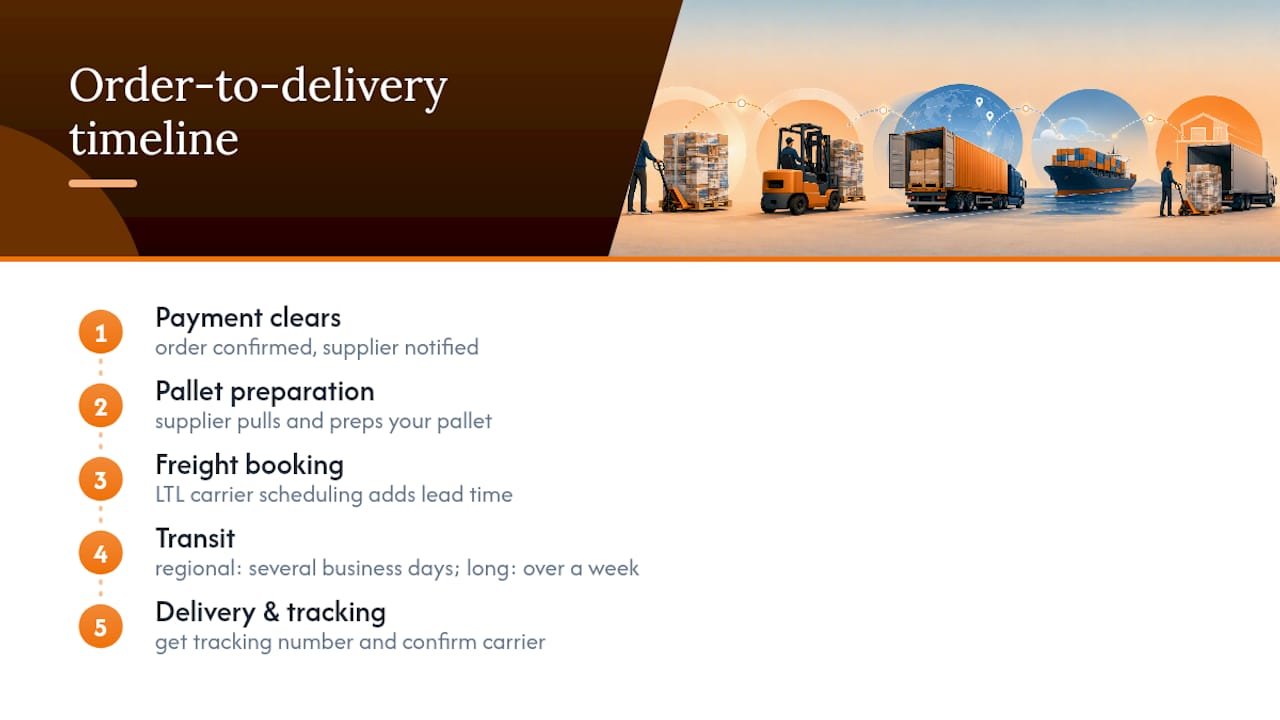
Ask for a tracking number as soon as the pallet ships, and confirm the freight carrier’s name directly. That gives you an independent way to verify delivery windows instead of relying solely on the seller’s estimate.
What Are Your Options If a Pallet Arrives Damaged or Misrepresented?
Return policies on liquidation pallets are narrower than what you’d expect from retail purchases, and that’s worth understanding before you order, not after a dispute starts.
Most legitimate liquidation suppliers sell “as is,” meaning they don’t accept returns simply because a percentage of books turned out to be unsellable. That’s the nature of unmanifested inventory. What responsible suppliers do typically address is freight damage that’s clearly documented, and significant manifest discrepancies where the actual contents don’t match what was described at the time of sale.
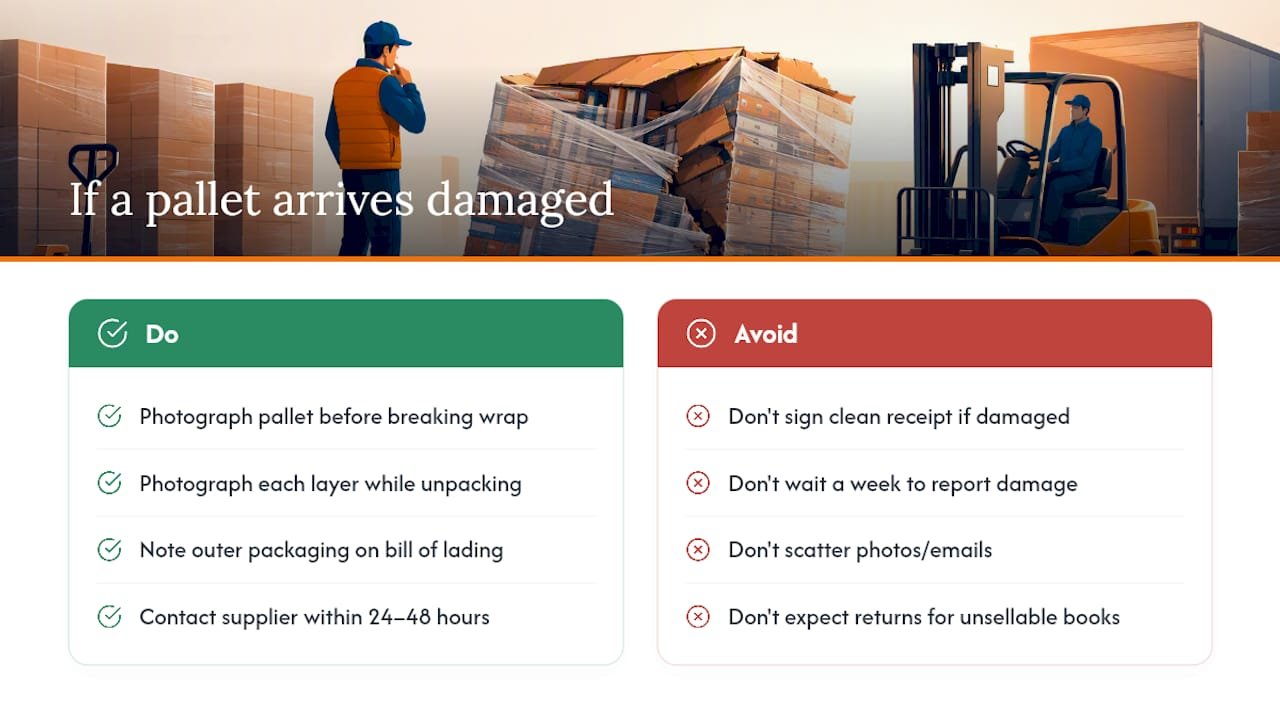
Your leverage in a dispute comes almost entirely from documentation. Photograph the pallet the moment it arrives, before you break the shrink wrap, and again as you unpack each layer. Note the condition of the outer packaging on the bill of lading the freight driver hands you. If the wrap is torn or the box is visibly crushed, write that on the delivery receipt before you sign it. Signing a clean delivery receipt on a damaged load makes a freight claim much harder to win later.
Contact the supplier within 24 to 48 hours of delivery if you spot a problem. Reputable vendors set a short window for damage claims, and waiting a week to report an issue often forfeits your ability to dispute it. Keep every email and photo in one place, since a scattered paper trail is the most common reason a legitimate claim gets denied.
Why the “Just Buy Bigger” Advice on Book Pallets Is Backwards
Most advice aimed at new resellers pushes volume too early: buy a truckload, negotiate a standing weekly order, lock in the lowest per-pound price. That advice assumes you already know how to sort, grade, and move inventory fast. Most first-time buyers don’t, and the research on pallet sorting bears this out: resellers who treat a single gaylord as a real test unit, tracking sell-through and margin before scaling, consistently make better vendor decisions than buyers who scale on price alone.
The conventional wisdom undersells freight as a line item and oversells manifest guarantees as a safety net. A manifest tells you what should be in the box. It doesn’t tell you the condition, and condition is what determines whether a book sells for $12 or gets recycled. What actually protects your margin is discipline: one pallet, honest tracking of what sold and what didn’t, and a supplier relationship built on a real test order rather than a sales pitch.
Prioritize the vendor conversation over the price tag. A supplier who answers manifest and condition questions clearly is worth a few extra dollars per book over one who won’t.
— Nene
How Do You Order a Test Pallet From Mega Pallets Liquidation?
Some online liquidation suppliers give resellers a lower-risk entry point than negotiating directly with regional liquidators who often require multi-pallet minimums before they’ll talk pricing. You can order a single mixed-books pallet, see exactly how it performs, and decide from real numbers instead of a sales projection.
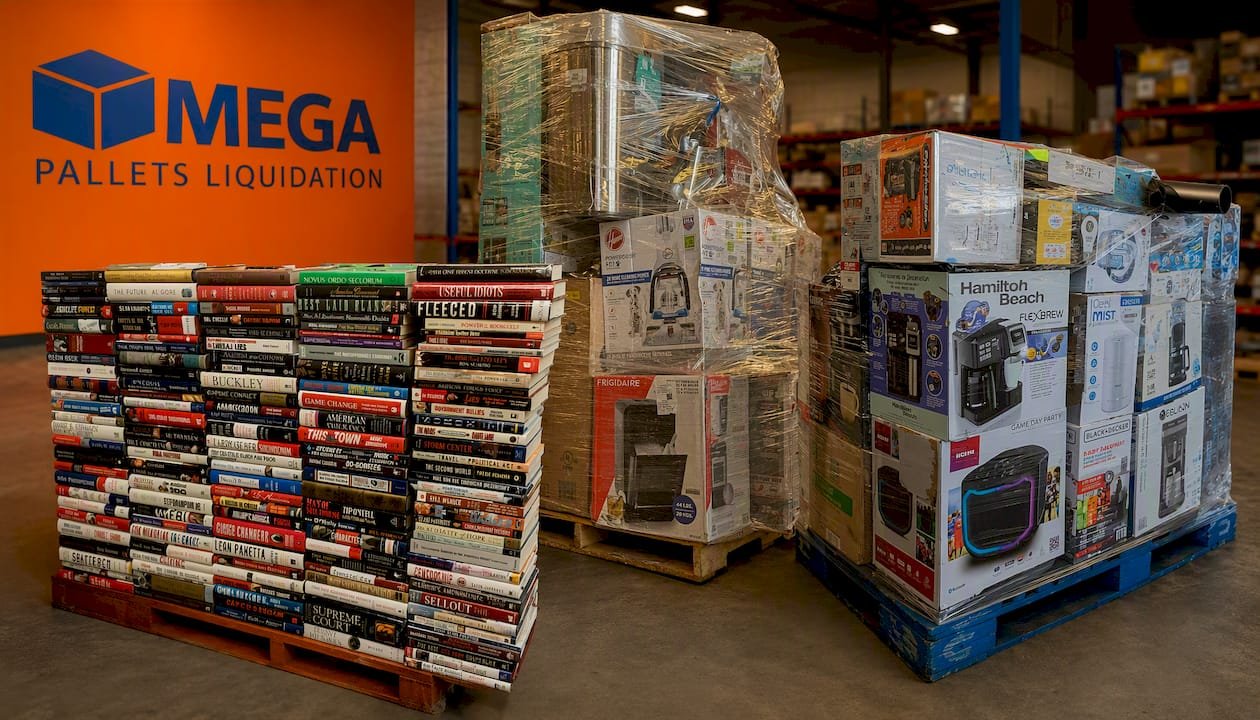
Start with the Mixed Books Liquidation Pallets page, which lists current pricing and pallet specs. Checkout runs through secure payment processing, and you’ll get shipping options at that stage, including whether your delivery address needs lift-gate service or has dock access. Review the ordering steps if you want the full process before you commit. If you want to diversify beyond books, the mixed electronics pallets are worth a look once your first book pallet proves out. Order one pallet, track what it earns, and let that number guide your next purchase.
Where Can You Learn More About Pallet ROI and Resale Channels?
Run your numbers through the pallet liquidation ROI estimator before ordering, and review this guide on routing books to the best-paying platform. For context on new-book bulk minimums versus liquidation buying, see Amazon’s bulk book buying resource.