Blog
Manifested vs Unmanifested: Resellers’ Playbook to Verify Itemized UPCs


Manifested pallets come with an itemized list of what’s inside, and that predictability costs more upfront. Unmanifested pallets sell blind, with no SKU-level breakdown, and that mystery earns you a lower price and a bigger workload. The right choice depends on your channel: if you list items individually on marketplaces, buy manifested; if you run a high-volume, low-friction outlet like a bin store, unmanifested can work once you have the throughput to absorb the variance.
TL;DR:
- Manifested pallets provide detailed item lists with UPCs, quantities, and condition grades, allowing for more accurate profit estimates before purchase.
- Unmanifested pallets are priced lower due to the absence of item details, but hidden costs like sorting, testing, and disposal can negate initial savings.
- Buyers should verify manifests by checking UPCs, quantities, condition notes, and requesting actual photos before payment to avoid discrepancies and fraud.
- High-volume resellers should only consider unmanifested lots once they process several pallets weekly and have a clear disposal and triage system.
- Starting with a manifested pallet from a trusted supplier reduces risk and helps establish realistic margin expectations for new or smaller operations.
Table of Contents
- Manifested vs Unmanifested: What a Manifest Actually Tells You
- What Do You Get With an Unmanifested Pallet?
- Manifested vs Unmanifested: Comparing the Real Trade-Offs
- How Do You Verify a Manifest Before Paying?
- What Hidden Costs Cut Into Your Margin?
- Who Backs This Guidance and What Does a Real Manifest Look Like?
- My Rule of Thumb: When Blind Buys Actually Make Sense
- Ready to Buy a Predictable First Pallet?
- Tools Worth Running Before You Buy
- Sources
- FAQ
Manifested vs Unmanifested: What a Manifest Actually Tells You
A manifested pallet ships with an inventory document, and that document is the entire reason buyers pay a premium for it. Sellers typically list each item’s description, UPC or SKU, quantity, condition grade, and estimated retail value, which lets you build a per-unit profit model before the pallet ever leaves the warehouse. That’s the core mechanic behind manifested liquidation lots, and it’s what separates a calculated purchase from a gamble.
A typical manifest includes:
- Item title and short description
- UPC or SKU for cross-referencing retail price
- Quantity per line item
- Condition notes (new, open box, customer return, damaged)
- Estimated retail value per unit
Manifests speed up intake dramatically. Instead of unboxing a pallet blind and photographing every item from scratch, you can pre-sort listings, price against comparable sales, and route items to the right channel before the truck arrives.
None of that makes a manifest a guarantee. Quantity counts drift, condition grades get generous, and a “new” item sometimes arrives with a cracked case. Treat the sheet as a working estimate you verify against a physical sample, not a contract.
What Do You Get With an Unmanifested Pallet?
Unmanifested, or “blind,” lots strip away the item list entirely. Sellers disclose the general category, pallet count, approximate weight, and a handful of photos, then leave the rest to discovery on your loading dock. That’s consistent with how unmanifested pallets are typically listed across the liquidation market: enough information to know what general world you’re buying into, not enough to know what’s actually inside a given box.
Sellers price these lots lower because skipping the sort saves them real labor. Building an accurate manifest takes staff time, scanning equipment, and quality checks, and blind lots let sellers pass that saved cost to you as a discount instead.
Typical signals on an unmanifested listing:
- Broad category (electronics, general merchandise, mixed returns)
- Pallet count and total weight
- A small photo set showing surface-level contents
- No UPC, SKU, or per-item quantity breakdown
The upside shows up when you land a pallet loaded with high-value overstock nobody bothered to sort out. The downside shows up just as often: salvage-grade goods, parts missing, or items that aren’t resalable on your platform at all.
Manifested vs Unmanifested: Comparing the Real Trade-Offs
The decision comes down to four axes: price, predictability, labor, and risk tolerance. Manifested lots command a higher invoice price but compress the range of possible outcomes. Unmanifested lots can post a better headline margin on paper, but that margin swings hard in both directions once you factor in sorting time. This trade-off is well documented in comparisons of manifested and unmanifested lots, where the consistent theme is that predictability itself has a price tag.
A quick way to frame your decision:
- Price vs. ROI volatility: Manifested lots narrow your expected margin range; unmanifested lots widen it in both directions.
- Labor conversion: Take the manifest’s estimated retail value, subtract your invoice cost and platform fees, then divide by expected processing hours per item to get a real per-unit labor rate.
- Hybrid sourcing: Many established resellers run manifested inventory for their primary listing channel and layer in occasional unmanifested lots to chase upside on a separate, lower-stakes outlet.
That hybrid model, mixing manifested and unmanifested truckloads by channel, is a common structure among buyers with enough volume to absorb a bad blind lot without it sinking a month’s cash flow.
How Do You Verify a Manifest Before Paying?
A manifest is only as good as the seller’s willingness to stand behind it, and a short pre-purchase check catches most of the bad ones.
- Confirm UPC or SKU presence on every line, not just the high-value items.
- Check for quantity detail per item, not a single bulk count for the whole category.
- Look for a condition grade on each line (new, like new, customer return, damaged, salvage).
- Request sample photos of the actual pallet, not stock images from the manufacturer.
- Ask about the return and refund policy for major manifest discrepancies before you wire payment.
Red flags include a “manifest” that lists only a category and total value, sellers who refuse to share the manifest before checkout, and listings with no UPCs anywhere on the sheet. A supplier vetting checklist built for FBA sourcing applies just as well here, since the underlying question is identical: can this seller prove what they’re selling you?
Pro Tip: Start with one small manifested pallet from a new seller before committing to a full truckload. A single pallet tells you fast whether their manifests match reality.
What Hidden Costs Cut Into Your Margin?
The invoice price is never your real cost. Sorting hours, testing bench time, and disposal fees for dead stock all eat into the margin a manifest’s estimated retail value seems to promise. These hidden costs run heaviest on unmanifested lots, where you’re sorting from zero information, but they show up on manifested pallets too whenever condition grades turn out optimistic.
Cost categories worth budgeting before you buy:
- Sorting and cataloging labor per pallet
- Testing bench time for electronics and powered goods
- Disposal or recycling fees for unsellable items
- Storage cost for inventory that sits while you process it
Marketplace compliance adds another layer of risk. Restricted categories, counterfeit concerns, and platform-specific gating can turn an otherwise profitable item into dead inventory overnight, and that risk applies whether the pallet was manifested or blind. The hidden dangers documented in unmanifested pallet purchases show how quickly apparent savings evaporate once labor and disposal costs get counted honestly. Manifests reduce this uncertainty by telling you what to expect ahead of time, but they don’t eliminate the need to verify.
Who Backs This Guidance and What Does a Real Manifest Look Like?
This analysis draws on Nene’s work with Mega Pallets Liquidation, a wholesale liquidation supplier that lists manifested pallets across electronics, tools, apparel, and general merchandise categories for resellers building repeatable sourcing operations.
Three current listings show what a working manifest looks like in practice:
- Bed, Bath & Beyond Manifested Pallet, a general home goods lot with itemized SKUs across kitchen and household categories.
- Bed, Bath & Beyond Manifested Pallet – Jhr4, a separate SKU-level lot from the same retailer showing how manifest contents vary pallet to pallet even within one source.
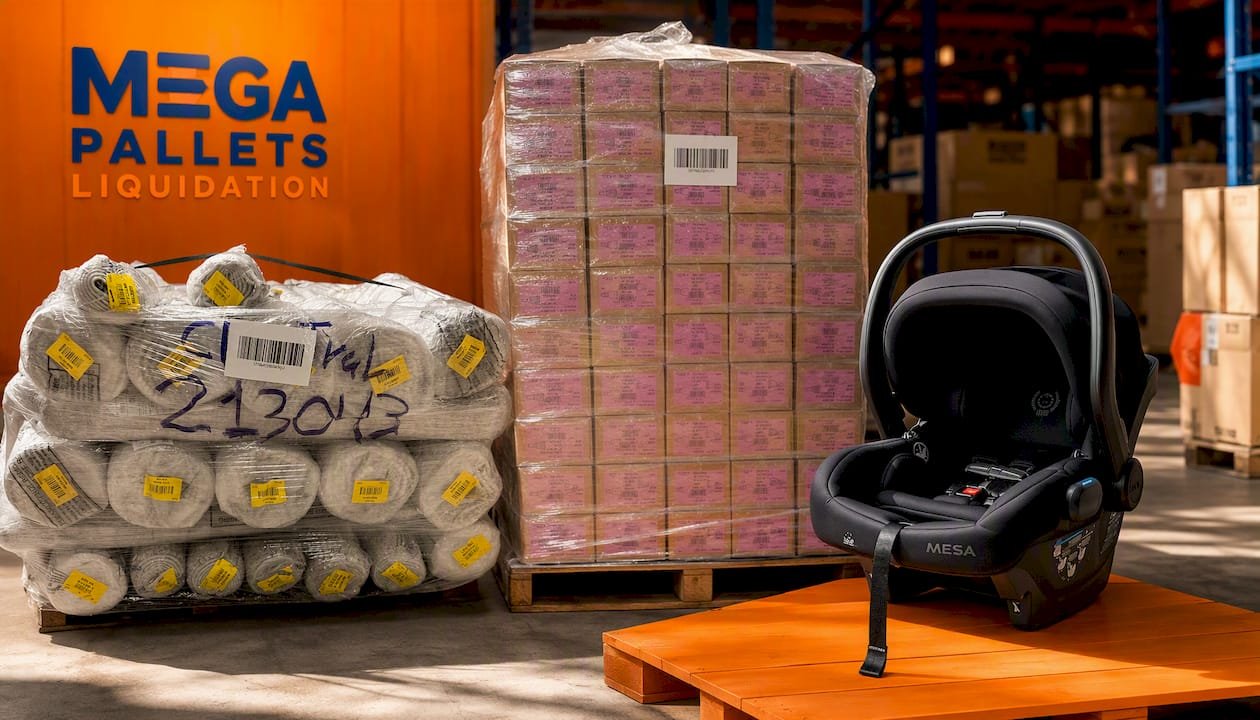
- Mesa V2 Car Seat Manifested Pallets – noCRA, a single-product manifest where quantity and condition grading matter enormously given the safety category.
Running the checklist against a listing like the Mesa V2 lot means confirming UPCs match the car seat model listed, checking the condition grade line by line, and confirming return terms before paying, since manifest estimates can miss on quantity or condition even on well-documented sheets.
A manifest is a strong starting estimate, not a receipt for what actually arrives. Sample-check the pallet against the sheet the moment it lands, and reconcile discrepancies before you list a single item.
My Rule of Thumb: When Blind Buys Actually Make Sense
Start every sourcing operation with manifested pallets. You need a baseline of predictable inventory before you can afford the variance of blind lots, and you need proven throughput before unmanifested buying makes financial sense rather than just gambling. My working threshold: don’t attempt regular unmanifested buys until you’re processing at least a few pallets weekly with a triage area and a clear disposal policy for what won’t sell. Below that volume, one bad blind lot can wreck a month.
— Nene
Ready to Buy a Predictable First Pallet?
Some suppliers offer an itemized starting point for pallets, so your first ROI calculation can be based on actual UPCs and condition grades instead of a guess. That’s the practical edge over sourcing unmanifested lots sight unseen while you’re still learning category margins.
Every manifested pallet across our shop lists item-level detail before you check out, whether you’re sourcing tool pallets, electronics lots, or branded apparel like our Lululemon pallets. If you’re new to wholesale sourcing, the safest first move is a single manifested pallet rather than a full truckload. Review the how to order page, pick one manifested lot in your strongest category, and use that first shipment to test your intake process before scaling up.
Tools Worth Running Before You Buy
A pallet liquidation ROI estimator turns manifest line items into a per-unit margin projection before you commit cash, and a supplier vetting checklist gives you a repeatable way to check UPC presence, sample photos, and refund terms across sellers. Run both before every new supplier relationship, manifested or blind.
Sources
FAQ
What Does “Manifested” Mean on a Liquidation Pallet?
It means the pallet ships with an itemized list showing UPCs, quantities, condition grades, and estimated retail value for each product inside.
Is Unmanifested Always Cheaper Than Manifested?
Unmanifested lots are typically priced lower upfront because sellers skip the sorting labor, but hidden costs like testing and disposal can close that gap or erase it entirely.
Can I Trust a Manifest Completely?
No. Manifests are estimates, and quantity or condition discrepancies are common, so sample-check every shipment against the sheet on arrival.
Which Lot Type Should a Beginner Buy?
Beginners should start with manifested pallets, since the itemized detail supports accurate listing and realistic margin planning before you have the throughput to handle blind-lot variance.
How Do I Spot a Fake or Weak Manifest?
Watch for category-only totals with no UPCs, sellers unwilling to share the manifest before purchase, and missing condition grades on individual line items.