Blog
48×40×40 Gaylord Box Size Handles 80% of U.S. Reseller Inventory

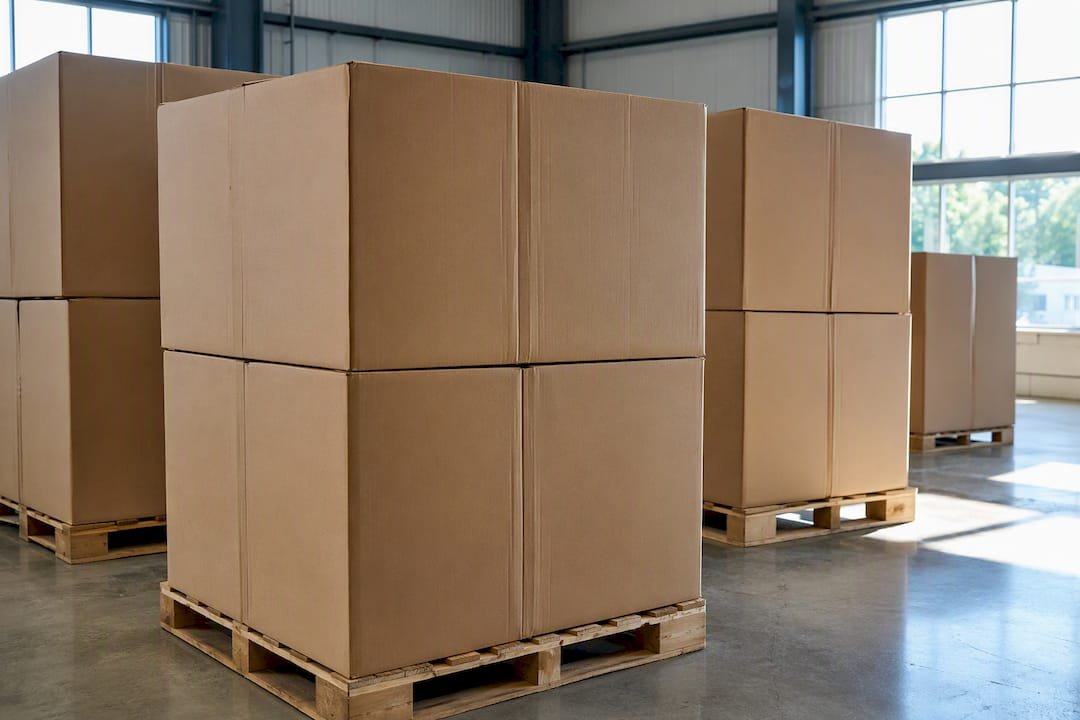
A Gaylord box uses a 48 × 40 inch footprint to match a standard GMA pallet, and while 48 × 40 × 36 inches gets cited as the traditional standard, 48 × 40 × 40 inches has become the practical best-selling default in current market sales. Heights across the category vary widely, and wall construction (single through five-wall) determines how much weight the box can safely carry.
TL;DR:
- The most common Gaylord box size today is 48 × 40 × 40 inches, with a variety of wall constructions suited for different weights and durations.
- Wall thickness determines capacity, with triple- or quadruple-wall boxes designed for heavy or dense loads, and single-wall boxes for lighter, short-term storage.
- Choosing the correct box involves matching your pallet footprint, product density, and dock or trailer height, rather than focusing solely on height or size.
- Flat-packed boxes maximize trailer space, especially for bulk shipments, while assembled boxes offer easier handling, with stacking depending on reinforcement and dock capabilities.
- For resellers, the 48 × 40 × 40 inch box fits 80% of general merchandise, but dense products like grocery goods might require shorter, double-wall boxes for optimal load management.
Table of Contents
- What Are the Common Gaylord Box Sizes?
- How Does Wall Construction Affect Weight Capacity?
- How Do You Choose the Right Gaylord Box Size?
- What Fits per Trailer: Assembled vs. Flat-Packed Counts
- Mega Pallets Liquidation’s Take on Sizing for Resellers
- Why the “Standard Height” Advice Misses the Point
- Buy Truckloads That Fit Your Gaylord Workflow
- Sources
What Are the Common Gaylord Box Sizes?
Most Gaylord boxes share the same 48 × 40 inch base, which is why most industry guides list this footprint as the common Gaylord base. Height is where the real variety shows up, and picking the wrong one either wastes cubic space or forces you to hand-stack goods that should have shipped loose.
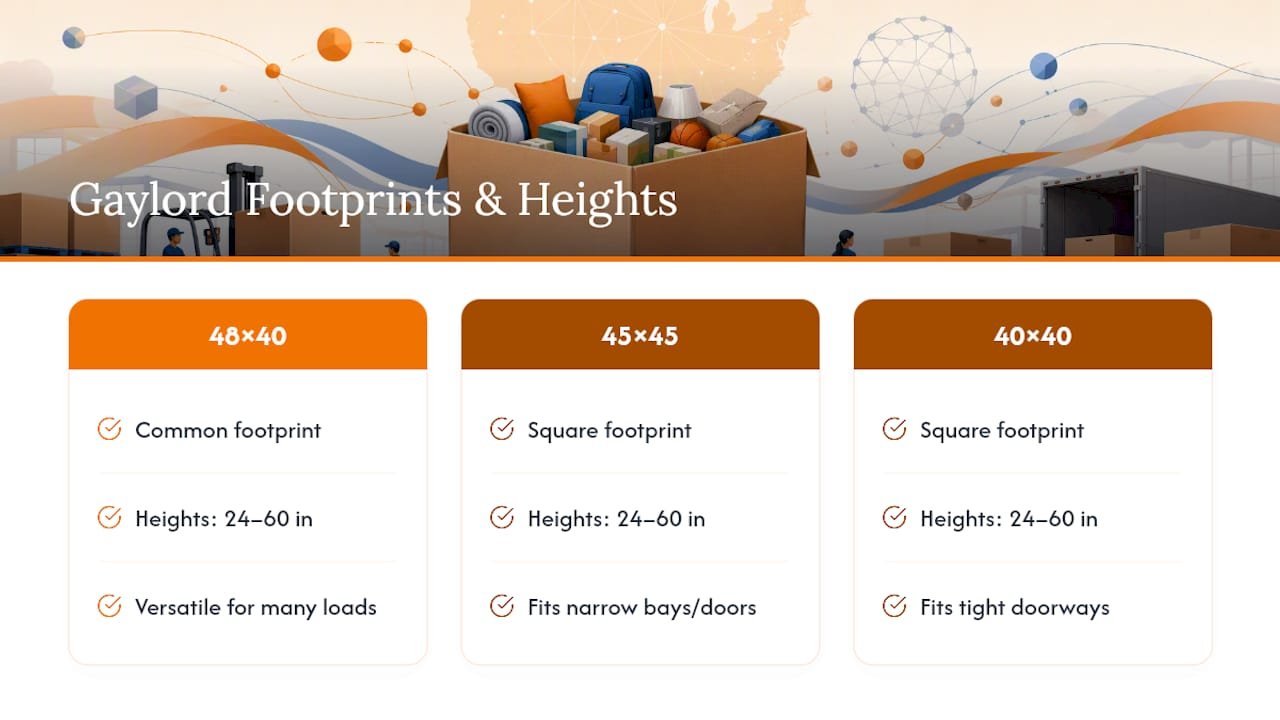
Shorter heights (24 to 36 inches) suit dense, heavy goods you’d load by hand: hardware, canned goods, small electronics. Taller heights (40 to 60 inches) suit lighter, bulkier merchandise like clothing, soft goods, or loose plastics where volume matters more than weight.
Two square footprints show up as alternatives when floor space or door width is tight: 45 × 45 inches and 40 × 40 inches. Both sacrifice some GMA pallet overhang efficiency but fit narrower rack bays and doorways better than the rectangular standard.
How Does Wall Construction Affect Weight Capacity?
Wall count is the single biggest factor in how much a Gaylord box can hold, more than the footprint or height. A single-wall box works for light, short stacks. Triple and higher wall counts exist specifically because wall construction correlates directly with rated capacity, with triple-wall reserved for the heaviest loads.
- Single-wall (2 wall): light-duty, short-term storage, low stacking pressure
- Double-wall (3 wall): general merchandise, moderate weight, most common reseller pick
- Triple-wall (4 wall): dense or heavy goods, extended storage, warehouse racking
- Four to five-wall: maximum-duty applications, export freight, long transit times
Statistic to know: Grade A used Gaylords sell at a meaningful discount to new stock while retaining most of their structural life, making them a reasonable option for buyers who don’t need pristine, first-use packaging.
Bottom style matters just as much as wall count. A full-flap bottom distributes weight across the entire base and holds up best for repeated handling. A slip-sheet bottom saves material cost but needs a pallet or platform underneath at all times. A tray bottom adds rigidity for irregular loads but costs more per unit. Before you trust any of these numbers, check the manufacturer’s rating stamp on the box itself and cross-reference it against ASTM D5639, the practice standard used to specify pallet box testing and performance.
How Do You Choose the Right Gaylord Box Size?
Start with the pallet you already run, not the box. Changing your footprint is an operational decision, not a packaging one, since it affects racking, forklifts, and trailer loading all at once. If your operation runs GMA 48 × 40 pallets, stick with that footprint unless you have a specific reason to switch.
From there, decide by weight or by volume. Dense product favors a shorter box with a stronger wall count. Bulky, light product favors height over wall thickness, since you’re paying for cubic space, not strength.
- Confirm your pallet footprint (48 × 40 in GMA is the default).
- Weigh a sample case load to decide dense vs. bulky classification.
- Match wall count to weight: double-wall for most general merchandise, triple-wall for dense or long-transit loads.
- Check dock door height and forklift mast clearance against your chosen box height.
- Confirm trailer tier height allows double-stacking if your dock plans for it.
- Order a small test batch before committing to a full truckload.
Pro Tip: If you’re mixing product types in one bin program, standardize on 48 × 40 × 40 inches first. It handles the widest range of general merchandise without forcing a second SKU into your storage layout.
What Fits per Trailer: Assembled vs. Flat-Packed Counts
Gaylord footprint compatibility with a standard pallet isn’t just a warehouse convenience. ISO 6780 documents 48 × 40 inches as one of the common flat pallet dimensions used worldwide, which is why that footprint dominates U.S. freight planning. The 45 × 45 and 40 × 40 alternatives exist mainly for tight rack bays, not for standard over-the-road freight.
Assembled Gaylords take up their full cubic footprint on a trailer, so a 53 foot trailer typically carries far fewer assembled units than flat-packed (KD) bundles of the same box. Manufacturer spec sheets note that Gaylords ship knocked down for freight efficiency, and KD counts per trailer vary widely depending on height and how tightly the bundles are banded.
- Assembled boxes load one tier high per pallet position unless your dock supports double-stacking with reinforced walls.
- KD flat packs stack in tall bundles, cutting trailer space per unit dramatically compared to assembled units.
- Banding and strapping should hold bundles tight through transit; loose KD bundles shift and damage box edges.
- Check your shipping and delivery constraints before ordering a full truckload of any single height.
Mega Pallets Liquidation’s Take on Sizing for Resellers
Megapalletsliquidation moves inventory across categories like electronics, general merchandise, tools, and grocery, and the 48 × 40 × 40 inch Gaylord shows up constantly across those lots because it handles mixed weight and volume without forcing a second box size into a reseller’s workflow. For buyers stocking general merchandise pallets or bulk rigid tool pallets, that height covers roughly 80% of what walks through the door.
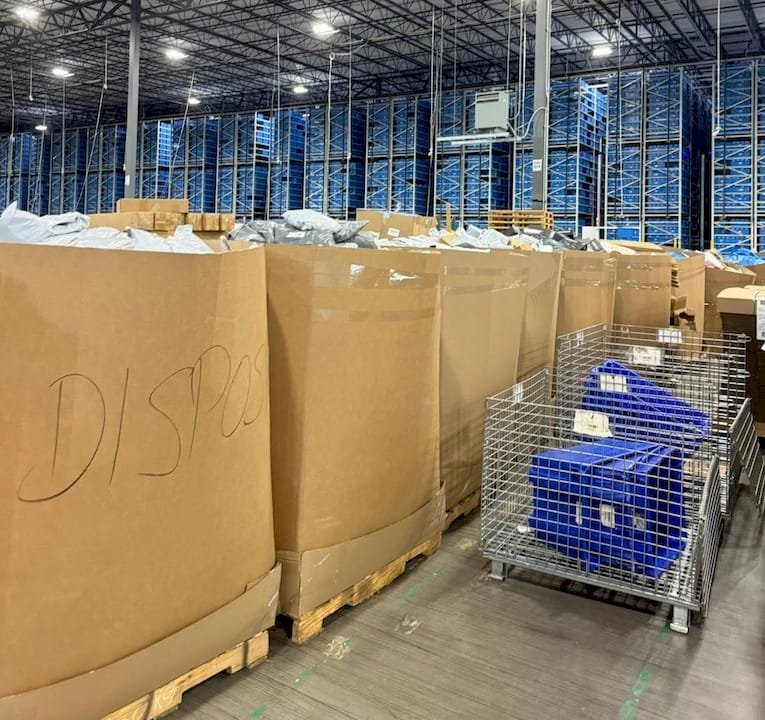
Exceptions come up with dense goods like grocery pallets, where a shorter 36 inch double-wall box handles the weight better. If you’re unsure which size fits your product mix, request a quote and Megapalletsliquidation’s team can assist you with your specific load before you commit to a full order.
Why the “Standard Height” Advice Misses the Point
Most buying guides fixate on 48 × 40 × 36 inches as “the” standard, and that framing sets buyers up to overthink a decision that should take five minutes. The footprint is the fixed variable. Height is a tuning knob, and the market has already voted with its wallet toward 40 inches over 36 for a reason: it holds more mixed merchandise without demanding a stronger wall count.
Where conventional advice really falls short is wall construction. Buyers obsess over height charts and skip the rating stamp entirely, then wonder why a triple-wall load crushes a double-wall box mid-transit. Weight classification, not height, is what should drive the construction decision first.
If you’re ordering your first truckload, prioritize in this order: confirm your pallet footprint, classify your product as dense or bulky, then pick wall count before height. Height is the easiest variable to adjust later. Wall count and footprint are the ones that cause real problems when you get them wrong.
— Nene
Buy Truckloads That Fit Your Gaylord Workflow
Once you’ve settled on a box size and wall construction, the next decision is sourcing inventory that actually fills it efficiently, and that’s where Megapalletsliquidation’s truckload catalog earns its place in your buying plan. Instead of piecing together mixed lots from scattered sellers, you get palletized, Gaylord-compatible inventory shipped as a single order with straightforward checkout and nationwide delivery.
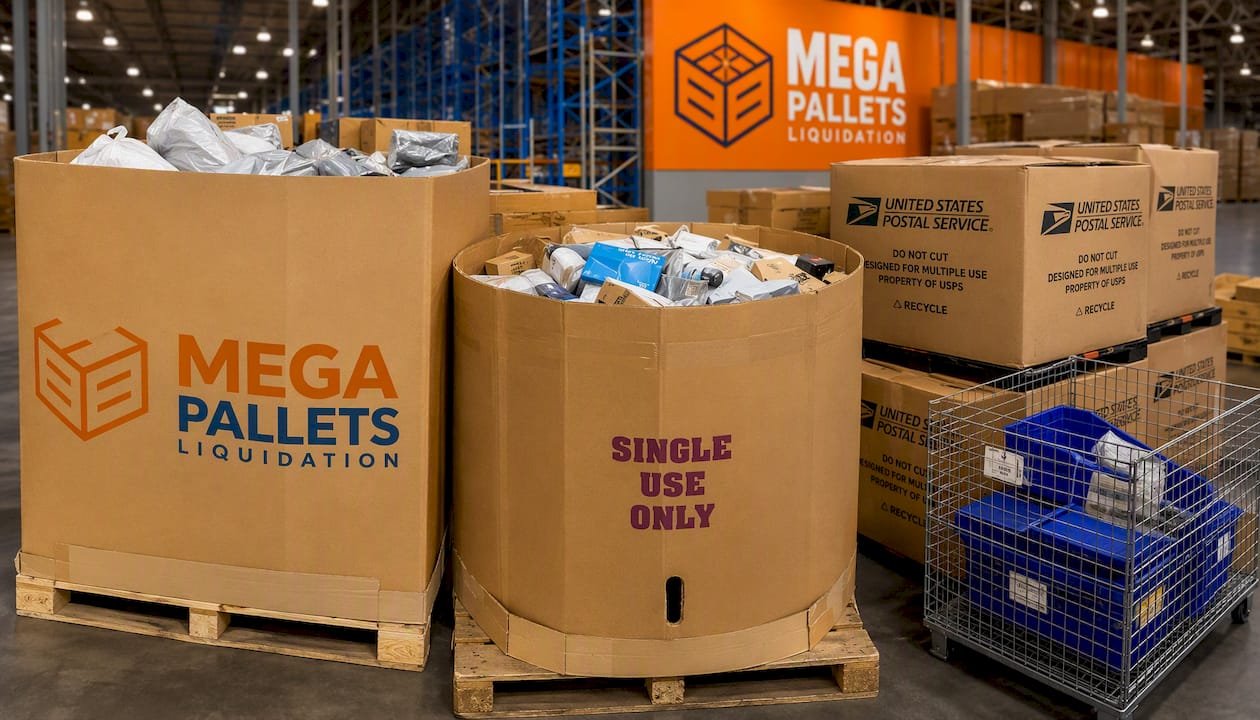
The Ecom Undeliverables SMALLS Tall Truckload works best for buyers with warehouse space to handle full volume and taller Gaylord bins. If your operation runs smaller storage or you’re testing a new category, the Ecom Undeliverables SMALLS Short Truckload delivers the same product mix at a smaller freight commitment. For resellers focused on mixed-return inventory and distribution-style flow, the Ecom Undeliverables USPS Truckload rounds out the lineup.
Request a quote today, check current shipping availability, and contact the Megapalletsliquidation sales team to confirm the truckload option that matches the box sizes and wall construction you’ve already settled on.
Sources
For verifying pallet compatibility, ISO 6780 covers principal flat pallet dimensions. For box strength and testing, ASTM D5639 governs pallet box specification. For sizing terminology and history, the corrugated container history archive traces the Gaylord name’s origin.
- Gaylord Box Buying Guide: Sizes, Grades & Capacity | Repackify
- ISO 6780 — Principal dimensions of flat pallets
- ASTM D5639 — Standard practice for specification of pallet boxes
- Standard Gaylord box dimensions — SizeMarker
Recommended
- Grocery Pallets Wholesale Mixed : Unbeatable Bulk Food & Household Essentials
- Wholesale General Merchandise Pallets: Unbeatable Resale Value & Variety
- Mixed Electronic Pallet Wholesale | 50–70 Brand-Name Consumer Electronics | Mixed Electronic Pallet For Sale
- Wholesale Amazon Mystery Boxes Pallet (50 Items) – Mega Pallets Liquidation