Blog
3 Numbers That Decide Pallet Profit Margin for Resellers

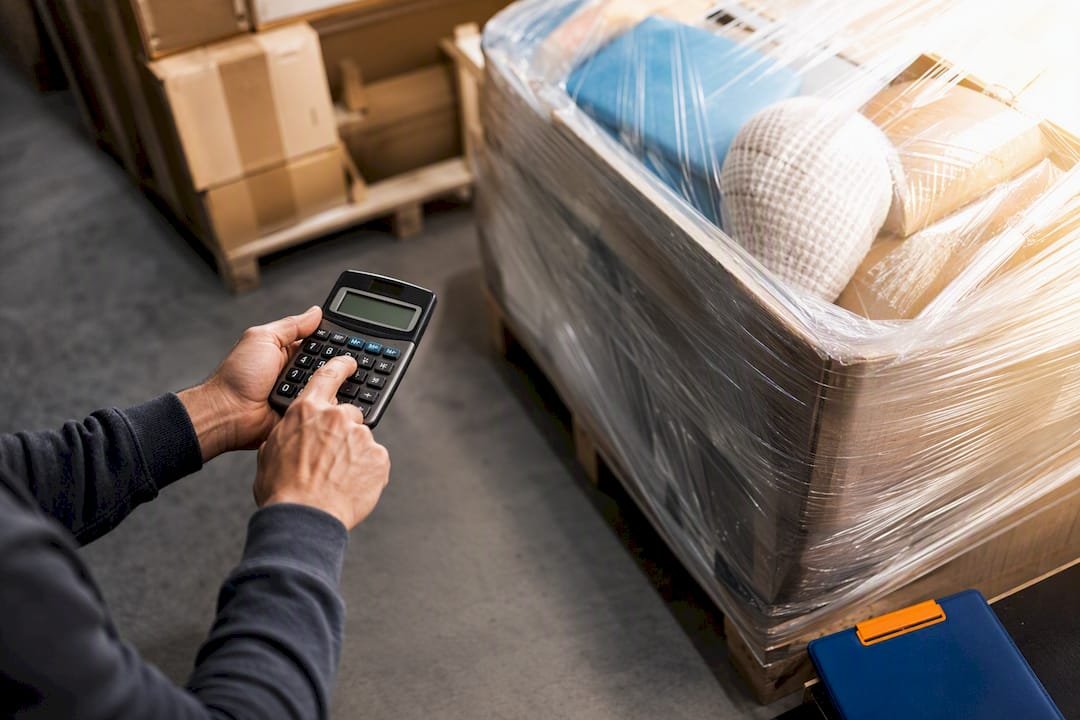
Aim for a positive net margin on unfamiliar sources, and treat a higher net margin as a stretch goal once you’ve vetted a supplier’s manifests. Before bidding on any lot, check three numbers first: purchase price, freight cost, and expected shrinkage. Those three drive most of the gap between what a pallet looks like it’s worth and what it actually pays out.
TL;DR:
- Most pallet resale businesses operate with net profit margins of 10% or less, making accurate cost calculations essential for profitability.
- Freight, shrinkage, and marketplace fees can significantly erode margins, with shrinkage potentially costing up to 40% of sales.
- Calculating the break-even recovery rate relative to manifest value helps prevent overbidding and ensures sales cover all costs.
- First-time buyers often underestimate shipping and damage costs, which are major factors that can turn a promising pallet into a loss.
- Prioritizing precise recovery rate estimation over chasing high gross ROI ensures more consistent profits in pallet reselling.
Table of Contents
- What Do Published Pallet Profit Margin Benchmarks Actually Show?
- How Do You Calculate Pallet Profit Margin Step by Step?
- What Cost Lines Actually Erode Your Pallet Profit Margin?
- How Does Pallet Profit Margin Vary by Pallet Type?
- How Can You Improve Your Pallet Profit Margin?
- A Worked Example: Tool Pallet Profit Margin
- What Pitfalls Most Often Wreck Pallet Profit Margins?
- What Should Resellers Actually Prioritize First?
- Where Can You Buy Pallets With These Numbers in Mind?
- Sources
What Do Published Pallet Profit Margin Benchmarks Actually Show?
Industry coverage of the pallet resale business tends to report thinner margins than the sales pitches suggest. Pallet Enterprise has noted that operating margins in the pallet business commonly land at 10% or less, with some operators reporting net margins under 5%. That’s a sobering baseline for anyone comparing it against the gross ROI figures thrown around online.
Those gross figures aren’t fiction. Individual liquidation pallets can post gross returns ranging from roughly 50% to several hundred percent, especially on manifests loaded with premium electronics or name-brand goods. The catch is that gross ROI ignores freight, marketplace fees, labor, and the items you can’t sell. Net profit after those costs often lands far lower than the headline number implies.
Price bands matter too. Recycled pallets and new pallets sit at different points on the pallet pricing index, and that spread affects margin math differently depending on whether you’re reselling the pallets themselves or the merchandise loaded onto them. Keep these ranges in mind when you’re screening a deal:
- Reported net margins for pallet operators: commonly 10% or below
- Gross ROI on individual liquidation pallets: roughly 50% to several hundred percent, before costs
- Recovery-rate assumption for new suppliers: budget conservatively until you have a track record
- Regional pallet pricing: varies by grade and market, which shifts your break-even point
How Do You Calculate Pallet Profit Margin Step by Step?
Calculating pallet profit margin comes down to three formulas you can run on any listing in about five minutes. Once you have them memorized, you’ll stop guessing and start pricing bids with actual numbers.
- Gross profit = total resale revenue − pallet purchase price
- Net profit = gross resale revenue − total landed cost − selling costs (landed cost includes freight, taxes, and handling; selling costs cover marketplace fees, packing, and labor)
- ROI = net profit ÷ total landed cost, expressed as a percentage
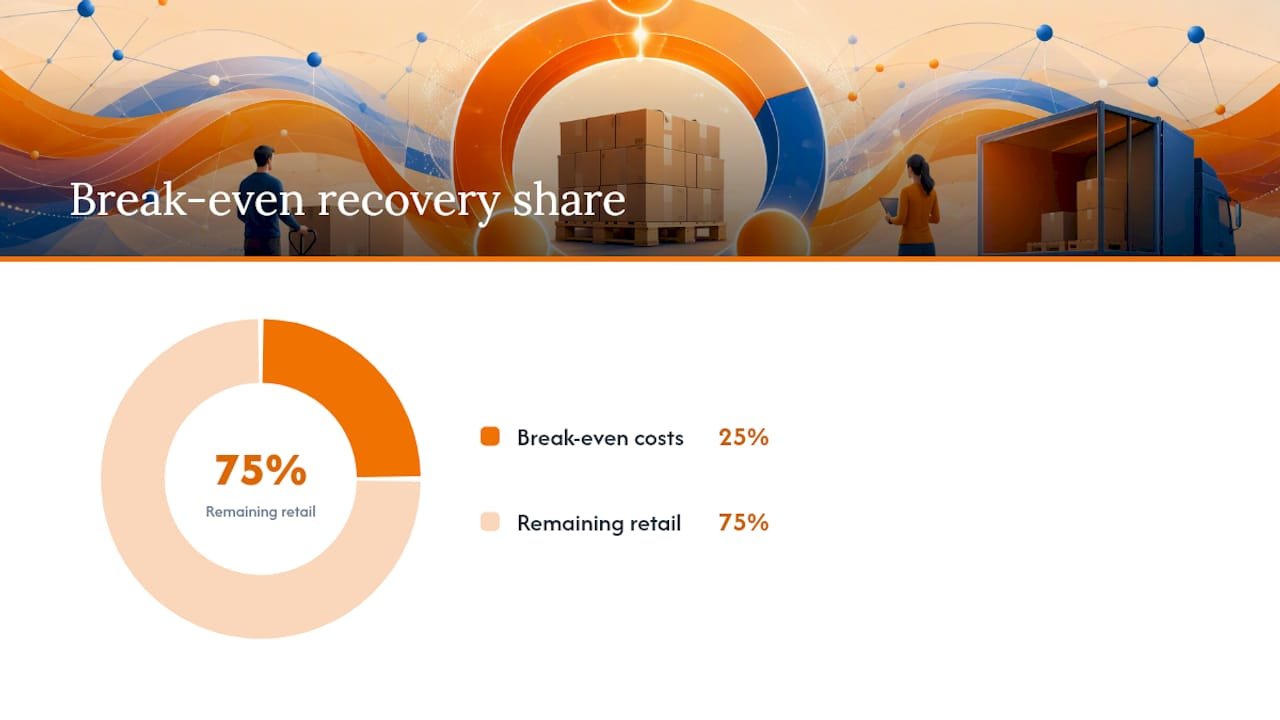
- Break-even recovery rate = (total landed cost + selling costs) ÷ manifest retail value
That last formula, drawn from a widely used liquidation pallet ROI model, tells you the minimum percentage of manifest retail value you need to actually collect in sales just to cover your costs. If a pallet’s manifest lists $10,000 in retail value and your landed cost plus selling costs total $2,500, your break-even recovery rate is 25%. Sell above that recovery rate and you’re in net-profit territory; sell below it and you’ve lost money regardless of how good the deal looked at auction.
The hardest input to estimate honestly is recovery rate, because it depends on condition, category, and how disciplined you are about pricing to move inventory instead of pricing to protect ego.
Pro Tip: Build a simple spreadsheet with these four formulas and a manifest retail-value field. Plug in your bid price before you commit, not after. Buyers who set a firm break-even number and refuse to chase auctions above it consistently outperform buyers who bid on gut feel.
What Cost Lines Actually Erode Your Pallet Profit Margin?
Most first-time buyers underestimate how many line items sit between purchase price and take-home profit. Here’s roughly how each cost category tends to eat into your margin:
- Purchase price: typically 50–90% of total landed cost, depending on how competitive the auction or listing was
- Freight: 5–30% of landed cost, with LTL shipments and long hauls pushing toward the higher end
- Marketplace fees: 5–20% of gross revenue, varying by platform and category
- Labor: 5–30%, driven by sorting, testing, cleaning, and listing time
- Shrinkage and unsellable goods: 10–40% or more, the single biggest wildcard in the entire model
Freight deserves special attention because it’s where clean-looking deals quietly turn into losses. Accessorial charges, DIM-weight pricing, and buyer premiums rarely show up in the headline price, and freight and accessorial fees are consistently flagged as the cost drivers people fail to check before bidding. Read supplier terms carefully, and if you’re moving freight internationally or in bulk, understanding how freight rates get calculated will save you from a nasty surprise invoice.
Shrinkage callout: A wholesale pallet ROI calculator recommends budgeting 10–40% for damage and unsellable inventory, with at least 20% as a baseline assumption for new suppliers. Run the math: on a $10,000 manifest with a 15% shrinkage assumption, you’re planning to sell $8,500 worth of goods. Bump shrinkage to 25%, and that drops to $7,500. That $1,000 swing, on a single pallet, is often the entire difference between a profitable lot and a break-even one.

How Does Pallet Profit Margin Vary by Pallet Type?
Margin expectations shift significantly depending on what’s loaded onto the pallet and where you sell it. Treat these as starting assumptions, not guarantees:
- Liquidation mixed-returns pallets: widest gross swings, since manifests mix high and low-value items. Use a conservative recovery rate of 15–30% until you know the supplier.
- Refurbished or recycled pallets: steadier, lower-ticket margins with more predictable demand from buyers who need functional pallets rather than resale merchandise.
- High-ticket categories (electronics, tools): higher per-item margin potential, but they demand testing and repair time, and shrinkage assumptions should run higher to account for dead-on-arrival units. Damage and testing costs on these categories skew toward higher per-item margin with higher variability, meaning bigger wins and bigger losses than a steady mixed lot.
How Can You Improve Your Pallet Profit Margin?
Raising net margin isn’t about finding a magic supplier. It’s about tightening the same five or six levers on every purchase.
- Vet manifests before bidding. Check vendor grading and reputation, especially for high-value categories where a bad manifest can wipe out your margin in one lot.
- Set your max bid from the math, not the auction energy. Calculate your break-even recovery rate first, then walk away if the bid climbs past what your net-margin goal allows.
- Build a test-and-repair workflow. Categorize items fast, bundle low-value pieces into lots instead of listing them individually, and get inventory to market quickly to reduce capital tied up in unsold goods.
- Negotiate freight and watch DIM weight. Ask suppliers about LTL rates upfront, and confirm whether pricing uses actual or dimensional weight before you commit.
- Match pricing strategy to channel. A marketplace with lower fees but slower turnover isn’t automatically better than a faster channel with higher fees. Calculate net margin per channel, not just gross revenue.
Pro Tip: Keep a running log of your actual recovery rate by supplier and category. After five or six pallets from the same source, you’ll have real data instead of a guess, and you can raise or lower your max bid accordingly.
If your business is scaling past casual reselling, SBA microloan programs are worth researching for funding larger inventory purchases without draining your operating cash.
A Worked Example: Tool Pallet Profit Margin
Here’s how the math plays out on a higher-ticket category. Say you buy a Dewalt Tool Pallet listed with a $10,000 manifest retail value for a $2,800 purchase price.
- Freight: $450 (LTL, regional delivery)
- Labor (testing, repair, listing): $500
- Marketplace fees: 10% of gross revenue
- Assumed recovery rate: 22% (conservative, given testing requirements on power tools)
- Gross revenue: $2,200 (22% of $10,000 manifest value)
- Net profit: roughly $2,200 − $2,800 purchase − $450 freight − $500 labor − $220 fees = a net loss unless recovery rate improves
That example is intentionally cautionary. Tool pallets carry real upside when you grade suppliers carefully and price for speed, but an aggressive purchase price paired with an optimistic recovery rate is exactly how a promising-looking lot turns into a loss. Always run your break-even recovery rate before you bid, not after the invoice arrives.
What Pitfalls Most Often Wreck Pallet Profit Margins?
The most common mistake isn’t a bad supplier. It’s skipping the math before bidding and letting auction excitement set your price instead of your break-even recovery rate. Fix this by writing your max bid down before you look at competing offers.
Surprise freight is the second-biggest margin killer. Accessorial charges, liftgate fees, and DIM-weight pricing can add hundreds of dollars to a shipment that looked cheap at checkout. Always request a full freight quote, including accessorials, before finalizing a purchase.
Overestimating recovery rate ranks third. Start conservative and adjust upward once you have real sales data.
Slow turnover quietly compounds all of the above. Every week inventory sits unsold is a week your capital isn’t buying the next lot, and storage costs stack up even when they’re not itemized anywhere. Price to move, not to maximize each individual sale.
Finally, watch for unregistered or informal resale operations that skip proper business setup. Getting an Employer Identification Number and tracking expenses correctly from day one avoids a tax headache once your volume grows.
What Should Resellers Actually Prioritize First?
The conventional advice on pallet resale spends too much time on sourcing tips and not enough on the math that determines whether a good source even matters. A great supplier with sloppy recovery-rate assumptions still loses money. A mediocre supplier paired with disciplined break-even pricing still turns a profit.
What gets underrated is the discipline to walk away from a lot that doesn’t clear your number, even when the manifest looks exciting. Auction psychology pushes people toward optimism. The break-even recovery-rate formula is the antidote, because it forces you to commit to a number before emotion enters the picture.
If you’re weighing pallet archetypes, resist the urge to chase the highest gross ROI headline you can find. A Premium Nordstrom Pallets lot and a Bulk Rigid Tool Pallets lot will carry different recovery-rate assumptions, different labor demands, and different capital-turn speeds. Model each on its own terms rather than assuming one formula fits every category.
Prioritize the recovery-rate estimate over everything else. Get that number right, and the rest of the model falls into place.
— Nene
Where Can You Buy Pallets With These Numbers in Mind?
Resellers can test this math against real inventory instead of theoretical benchmarks by using organized, multi-category liquidation lots with nationwide shipping options and secure checkout, allowing them to run the break-even recovery-rate formula against an actual manifest before committing.
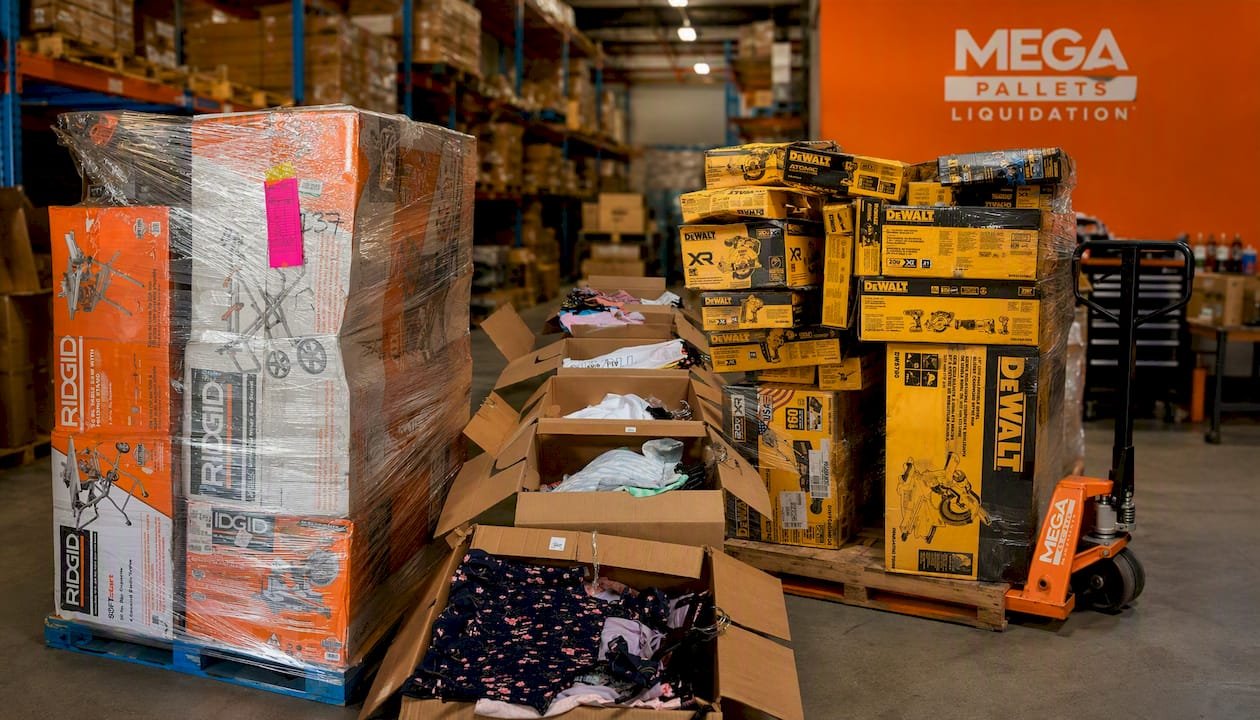
If you’re building toward higher per-item margins, the Premium Nordstrom Pallets category offers branded merchandise that tends to hold resale value when graded correctly. For buyers focused on tools and steady turnover, the Dewalt Tool Pallet and Bulk Rigid Tool Pallets options give you a consistent product mix to model against. Before you buy, check the shipping and delivery terms so freight costs are part of your bid calculation from the start. Browse the current liquidation pallet listings and run the numbers on a manifest that fits your resale category.
Sources
For business setup, review the IRS guidance on obtaining an EIN and SBA’s microloan programs for financing inventory. For ongoing benchmarks, Pallet Enterprise covers industry margin trends, while Underpriced.app and Flipping offer calculators to test recovery rates and ROI on your own listings.
- So Being in the Pallet Business Is Tougher than You Think?
- Eurosaleonline
- Get an Employer Identification Number (EIN) | Internal Revenue Service