Blog
Stop Getting Charged Sales Tax: Resale Certificates for U.S. Resellers


A resale certificate lets a registered seller buy inventory tax-free, as long as the goods are meant for resale rather than personal use. Before you can issue or accept one, most states require you to hold an active seller’s permit. The next move is simple: register for that permit in your home state, then hand suppliers a fully completed certificate before you check out.
TL;DR:
- Most states require you to hold an active seller’s permit before issuing or accepting a resale certificate, with application processes varying by state.
- The multistate uniform resale certificate is accepted by approximately 36 states, but acceptance depends on where the sale is delivered and may involve additional state-specific requirements.
- Confirm each state’s acceptance policy and the supplier’s preferred documentation before your first purchase to avoid unexpected sales tax charges.
- Properly completing the certificate with specific business details and using a blanket form for repeat orders minimizes rejection risks.
- Keep your permits and certificates active, updated, and well-organized for at least three to four years to ensure compliance and ease in case of audits.
What Is a Resale Certificate for Resellers, and Does One Work in Every State?
No single form covers every state, and that catches a lot of new resellers off guard. The Multistate Tax Commission’s Uniform Sales & Use Tax Resale Certificate was built to solve exactly this problem, letting a registered buyer present one form across multiple states instead of filling out a different document for every supplier. As of its most recent revision, 36 states have indicated they’ll accept it, though that number shifts as state policies change, so treat it as a strong starting point rather than a guarantee.
Acceptance breaks down into three common patterns once you start buying across state lines:
- Some states honor an out-of-state seller’s permit number without requiring you to register locally.
- Others insist you register in-state before they’ll accept any resale exemption, regardless of what number you already hold.
- A handful require their own state-specific form and won’t recognize the MTC document at all, even from registered resellers.
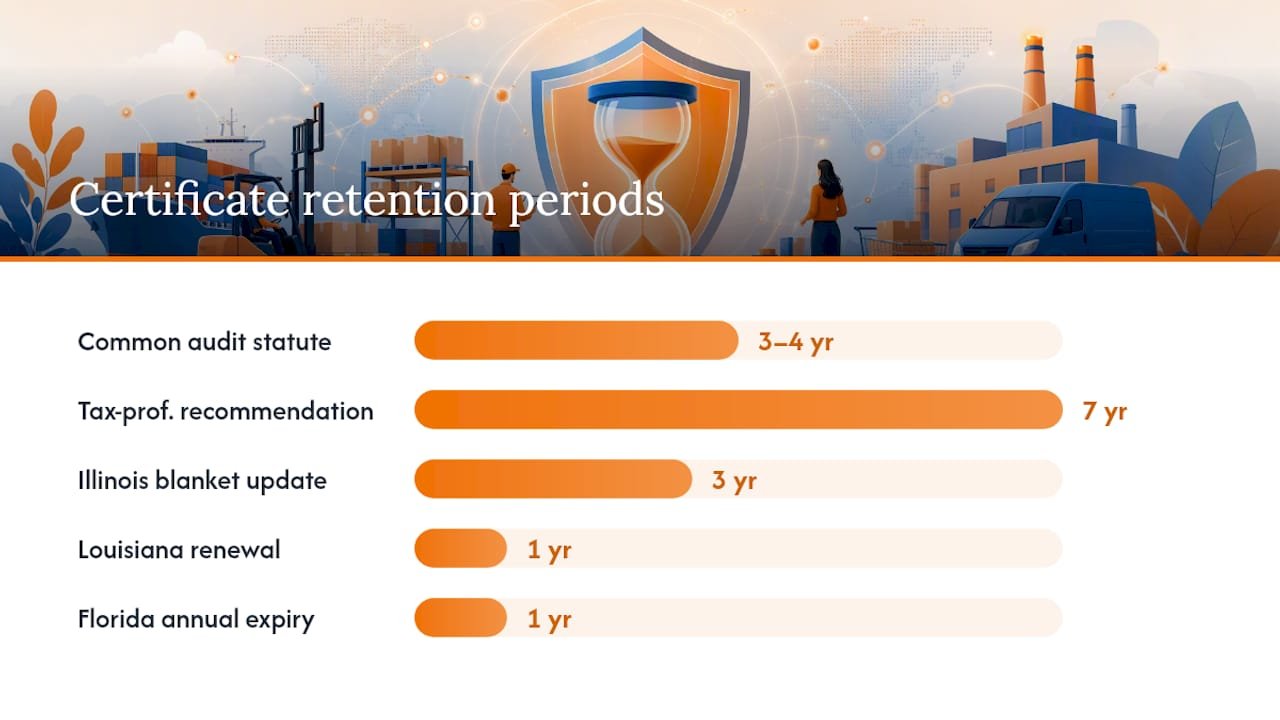
Stripe’s breakdown of resale certificates confirms this patchwork exists largely because acceptance depends on where the sale is delivered, not just where the buyer is registered. Illinois is a good example of a state that layers its own requirements on top: sellers there must verify the purchaser’s account number and keep the Certificate of Resale on file, with blanket certificates needing an update at least once every three years.
Here’s the number that matters: with 36 states on board with the uniform form, you’ll likely need it for the majority of your interstate purchases, but you should still confirm acceptance before every new supplier relationship. Three states, Alaska, Delaware, and a few others, don’t charge statewide sales tax at all, so resale certificates aren’t required there for state-level purchases. Montana, New Hampshire, and Oregon fall into that same no-sales-tax category.
Before your first purchase from an out-of-state supplier, check that state’s department of revenue page directly, and confirm with the vendor which document they’ll actually accept. A phone call or email up front beats getting hit with unexpected sales tax at checkout.
How Do You Get a Resale Certificate? Registering for Your Seller’s Permit
You can’t get a resale certificate without first holding a seller’s permit, sometimes called a sales tax permit or reseller permit depending on the state. The certificate itself is just proof that you’re a registered business buying for resale. The permit is what makes that proof valid.
Here’s the process most states follow:
- Identify your nexus states. Nexus means you have enough connection to a state to owe sales tax there, whether through a physical location, employees, inventory storage, or hitting an economic sales threshold. Register in every state where you have nexus, not just your home state.
- Gather your documents. Most state portals ask for your EIN, legal business name, business address, and a description of what you sell.
- Apply through the state’s online portal. States like California (via CDTFA) and Illinois (via IDOR) run digital applications that typically process in a few business days to a few weeks.
- Pay any required fee or deposit. Most states charge nothing for the permit itself, but a few require a security deposit tied to expected sales volume.
- Receive your permit number. This number goes directly onto your resale certificate every time you buy tax-exempt inventory.
If you sell through a marketplace facilitator like Amazon or eBay, some of your sales tax collection duties may already be handled at the platform level. That doesn’t eliminate your need for a seller’s permit if you’re also buying inventory directly from wholesale suppliers.
Pro Tip: Register in a new state before you place your first order there, not after. Suppliers can’t retroactively refund sales tax in every state, and waiting means you might eat that cost on your first shipment.
What Information Must a Resale Certificate Include?
Vendors reject resale certificates constantly, and it’s almost always over the same handful of missing details. Get the fields right the first time and you’ll avoid the back-and-forth that delays your order.
Across nearly every state, a valid certificate needs:
- Your business name, exactly as it’s registered with the state
- Your seller’s permit number
- The supplier’s business name
- A description of the goods being purchased
- Your signature and the date
The description field is where most rejections happen. “Merchandise” or “various goods” reads as vague to a supplier trying to protect itself from an audit. A description like “liquidation pallets of general merchandise for resale” ties the purchase directly to your normal business activity and gives the vendor something concrete to file.
You’ll also need to decide between two certificate types. A blanket certificate covers all future purchases from one supplier and is the better choice if you’re a repeat buyer, since you won’t re-file paperwork every order. A single-transaction certificate covers one purchase only and works fine for a one-off buy, but it’s extra friction if you’re sourcing inventory regularly from the same source.
Rejections almost always trace back to one of three problems: a missing signature, a business name that doesn’t match your registration exactly, or a description too generic for the vendor to defend in an audit. Fix those three things and most acceptance issues disappear.
Do Sellers Have to Accept Resale Certificates? Verification and Liability
Sellers aren’t required to accept every certificate handed to them, and a cautious supplier is protecting itself, not being difficult. Many states apply a “good faith” standard: a seller who accepts a properly completed certificate isn’t liable for uncollected tax later, even if the buyer misuses the exemption. But that protection only holds if the seller actually verified the certificate looks legitimate.
That’s why suppliers run checks before waiving tax at checkout:
- Looking up the permit number on the state’s active-account lookup tool
- Confirming the business name on the certificate matches the registered account
- Reviewing whether the item description plausibly matches the buyer’s stated business
You can speed up your own onboarding considerably by handing suppliers more than the bare minimum. Upload your completed certificate directly to your buyer account rather than waiting to be asked. Include a screenshot of your active permit status from the state lookup tool. Write item descriptions that clearly tie to your resale business rather than generic catch-alls.
Pro Tip: Suppliers don’t chase down missing paperwork, they just charge tax and move on. Get your certificate on file before your first order instead of after, and you skip the refund request entirely.
How Long Do You Keep Resale Certificates, and What Triggers an Audit?
Retention rules vary by state, but the safe floor is matching your state’s audit statute, which commonly runs three to four years. Plenty of tax professionals recommend holding onto certificates for seven years regardless, since audits sometimes reach back further than the statutory minimum suggests, especially if a state suspects a pattern of misuse.
Renewal cycles differ too, and missing one quietly turns a valid exemption into an invalid one:
- Louisiana requires annual renewal for its resale exemption.
- Florida’s annual resale certificate expires every December 31, meaning you’re reapplying yearly whether your business changed or not.
Misuse carries real consequences beyond an awkward phone call from the state. If you buy inventory tax-free and then use it yourself instead of reselling it, most states expect you to self-report and pay use tax on that item. Deliberate or repeated misuse escalates fast: back taxes, penalties, and interest are standard, and states can pursue criminal charges when the pattern looks intentional rather than accidental.
The state audit statute is a floor, not a ceiling. If you’re buying in categories that see frequent exempt purchases, like liquidation pallets bought weekly, keeping records longer than the minimum protects you if a multi-year review ever looks back at your account.
Reseller Checklist: Buying Liquidation Pallets Tax-Exempt
Before you place an order for bulk inventory, run through this short list. It catches the mistakes that slow down or reject a resale purchase.
- Active seller’s permit in your nexus states
- A completed blanket certificate on file if you’re a repeat buyer
- Item descriptions that clearly tie to your normal resale activity
- Certificate and permit screenshot uploaded to your vendor account before ordering
Uploading your certificate ahead of time avoids what’s probably the most common headache in reseller purchasing: getting charged sales tax at checkout, then having to chase a refund afterward. Suppliers can’t waive tax they’ve already collected without a request on your end, so get ahead of it.
Megapalletsliquidation works with resellers buying across categories where clear resale intent matters, from general merchandise pallets to wholesale kids toys pallets. Onboarding is built around getting your documentation on file early, so tax exemption applies from your first order rather than your third.
Pro Tip: Keep a folder, digital or physical, with your permit, your certificate, and a copy of every purchase order tied to a resale exemption. When a state asks for proof, you want it in one place, not scattered across a year of email threads.
Bottom Line: What to Do This Week
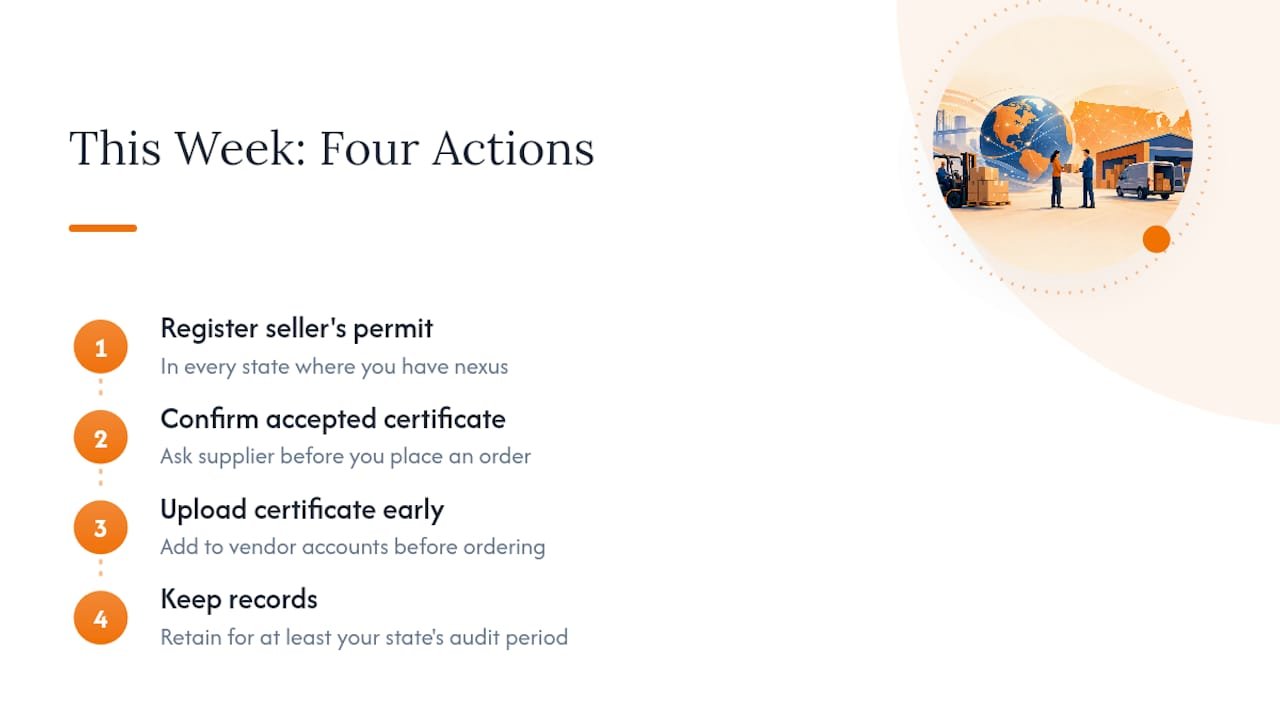
Register for a seller’s permit in every state where you have nexus, then confirm with your supplier which resale certificate they’ll actually accept before you place an order. Upload the completed certificate to your vendor accounts instead of waiting to be asked, and hold onto records for at least as long as your state’s audit statute requires. Before your first purchase from an out-of-state supplier, check that state’s rules directly. When something looks unclear, a quick call to the state revenue department or a sales tax professional saves you far more time than guessing.
The Real Gap in Resale Certificate Advice
Most guides on this topic treat the resale certificate like a one-time form you fill out and forget. That’s the part of the conventional advice that falls short. The certificate itself is trivial paperwork. What actually determines whether you avoid tax friction is whether your permit stays active, your descriptions stay specific, and your renewal dates stay on your calendar, none of which get much attention in the typical explainer.
The bigger miss is treating multistate acceptance as settled once you have the MTC form in hand. Thirty-six states signing on sounds comprehensive until you’re the reseller stuck at checkout in one of the states that isn’t. Verification is not optional busywork sellers do to slow you down. It’s the mechanism that keeps your exemption valid if a state ever looks back at the transaction.
If you’re prioritizing anything first, prioritize the vague description problem. It’s the quiet cause behind more rejected certificates than any missing signature.
— Nene
A Wholesale Partner That Makes Resale Certificates Simple
Megapalletsliquidation removes the back-and-forth that slows down tax-exempt purchases elsewhere. Instead of getting charged sales tax at checkout and filing for a refund later, resellers upload their completed resale certificate and permit documentation to their account before ordering, so exemptions apply from the first purchase, not the third.
Buyers browsing categories like Amazon Bulk Liquidation Pallets or mixed electronics lots can move straight from paperwork to purchase without the usual delay. If an order doesn’t work out, the returns and refund policy spells out exactly what’s covered, so you’re not guessing after the fact. Whether you’re stocking a flea market booth or restocking an online storefront, organized inventory categories and nationwide shipping mean you spend less time chasing suppliers and more time reselling. Get your resale certificate on file, then browse the current Amazon Bulk Liquidation Pallets lineup to place your next tax-exempt order.
This article is general information, not a substitute for advice from a qualified financial advisor. Consult a qualified financial professional about your own circumstances before acting on anything here.
Sources
- Uniform Sales & Use Tax Resale Certificate – MTC
- What Is a Certificate of Resale, and How do Businesses Get One? | Stripe
- How to Fill Out a Resale Certificate: Step by Step – LegalClarity
- Resale certificate FAQs – Texas Comptroller