
Blog
Wholesale seasonal clearance stock – when and what to buy?


If you buy and sell wholesale, you already know that timing is everything. Wholesale seasonal clearance stock shows up at predictable points in the year, and knowing when to move on it can mean the difference between a great margin and a missed opportunity.
This guide is for wholesalers, resellers, and small business buyers who want to stock smarter without overpaying. We’ll break down why seasonal clearance stock happens in the first place, which industries offer the best buying windows and when, and the practical strategies that help you buy the right products at the right time.
No guesswork, no filler — just a clear roadmap to making clearance seasons work in your favour.

What Seasonal Clearance Stock Means for Wholesalers
Wholesale seasonal clearance stock refers to periodic price reductions on wholesale batches of products remaining in warehouses after main sales seasons end. For wholesalers, these moments represent a predictable opportunity to supplement offerings profitably, capitalizing on periods when the market favors rapid inventory turnover.
How Seasonal Clearance Stock Differs from End-of-Line Sales
These two categories are often confused, but a key distinction separates them:
| Seasonal Clearance Stock | End-of-Line Sales |
|---|---|
| Tied to the industry’s annual cycle | Not linked to seasonal patterns |
| Appears regularly (e.g., post-summer, post-winter) | Occurs when a product is discontinued |
| Full-value products at reduced prices | Often discontinued or replaced items |
Seasonal clearance stock follows a reliable, recurring rhythm — making it far more plannable for wholesalers.
Key Benefits of Buying Seasonal Clearance Stock in Bulk
With this in mind, the advantages of purchasing wholesale seasonal clearance stock become clear:
Lower acquisition costs on full-value products
Accelerated inventory turnover through attractive pricing
Greater product variety available within a single buying window
Flexible demand response in the months following purchase
Planning purchases around these cycles gives wholesalers a genuine competitive edge.
Why Seasonal Clearance Stock Happens

End of Sales Cycles and Collection Changes in Fashion and Footwear
In clothing and footwear, wholesale seasonal clearance stock is a direct result of collection transitions. As spring-summer lines make way for fall-winter ranges, retailers must clear existing inventory to accommodate incoming stock — creating predictable clearance windows for wholesalers to capitalise on.
Promotional Campaign Endings in Electronics, Cosmetics and Home Goods
Beyond fashion, industries such as:
Electronics
Home appliances
Decorations
Cosmetics
experience clearance stock when promotional campaigns conclude or seasonal inventory cycles end. Once a campaign closes, surplus stock becomes available at reduced wholesale prices, offering strong margin opportunities for buyers who plan ahead.
How Regularity and Predictability Create Buying Opportunities
Perhaps the most valuable characteristic of wholesale seasonal clearance stock is its regularity. These clearance cycles repeat consistently, season after season, across industries. With this in mind, wholesalers can:
Plan purchases well in advance
Tailor product offerings to match seasonal demand
Optimise merchandise turnover by buying in quantities aligned with actual market needs
This predictability transforms seasonal clearance from a reactive opportunity into a strategic procurement tool, allowing wholesalers to operate with greater efficiency and confidence throughout the year.
Best Times to Buy by Industry
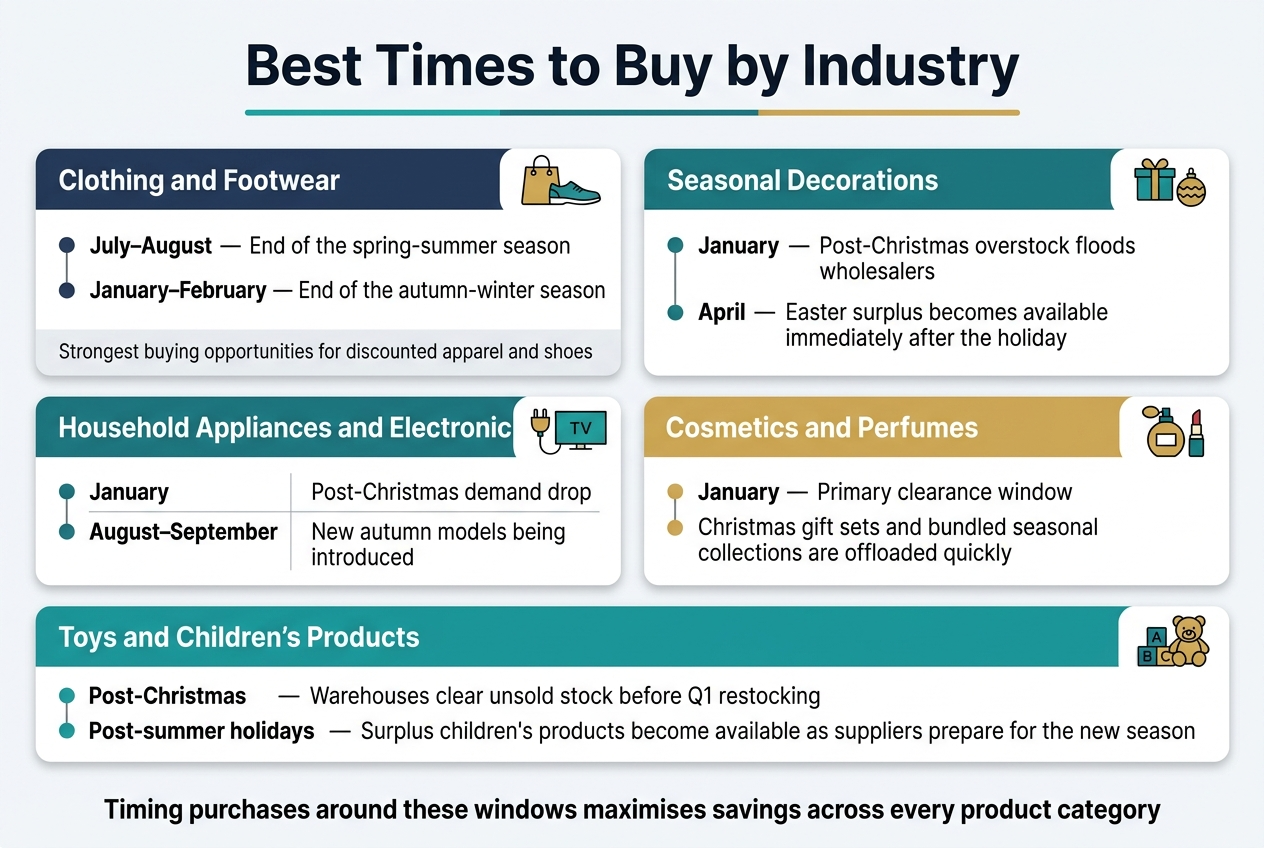
Clothing and Footwear
Wholesale seasonal clearance stock in clothing and footwear peaks twice yearly:
July–August: End of the spring-summer season
January–February: End of the autumn-winter season
These windows offer retailers the strongest buying opportunities for discounted apparel and shoes.
Seasonal Decorations
With this in mind, decorations present reliable surplus cycles:
January: Post-Christmas overstock floods wholesalers
April: Easter surplus becomes available immediately after the holiday
Household Appliances and Electronics
Two key clearance periods define this category:
| Period | Reason |
|---|---|
| January | Post-Christmas demand drop |
| August–September | New autumn models being introduced |
Cosmetics and Perfumes
Clearance sales align with the end of promotional periods. January is the primary window, particularly for Christmas gift sets and bundled seasonal collections that wholesalers need to offload quickly.
Toys and Children’s Products
Now that we have covered other categories, toys follow two distinct surplus cycles:
Post-Christmas: Warehouses clear unsold stock before Q1 restocking
Post-summer holidays: Surplus children’s products become available as suppliers prepare for the new season
Timing purchases around these windows maximises savings across every product category.
Smart Strategies for Buying Seasonal Clearance Stock
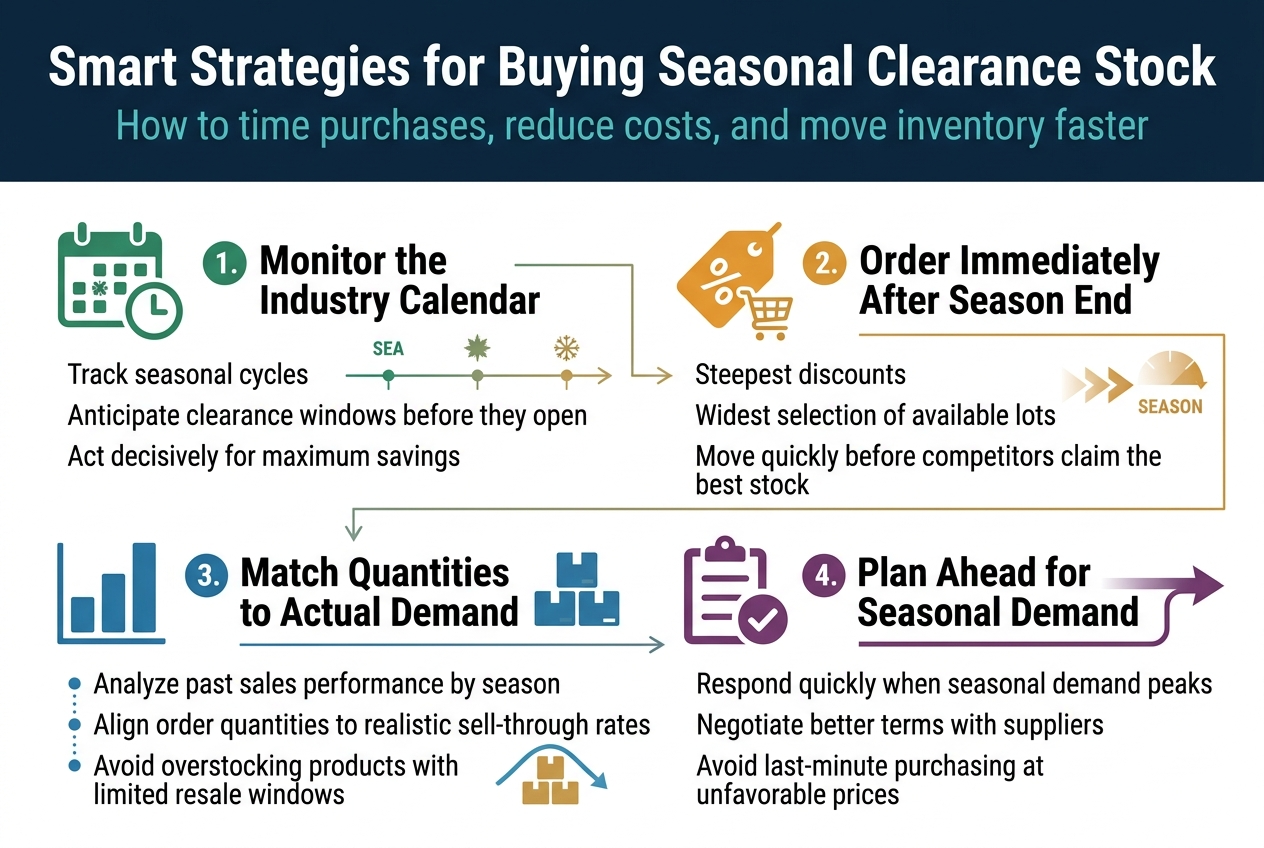
Monitoring the Industry Calendar to Time Purchases for Maximum Savings
Tracking seasonal cycles is essential when sourcing wholesale seasonal clearance stock. By aligning purchases with the industry calendar, you can anticipate clearance windows before they open and act decisively.
Ordering Immediately After Season End for Lowest Prices and Widest Selection
The window right after a season closes offers the steepest discounts and the broadest selection of available lots. Waiting too long means competitors claim the best stock first. Move quickly to secure the most favorable deals.
Matching Purchase Quantities to Actual Market Demand for Faster Turnover
Buying in bulk without referencing real demand data leads to slow-moving inventory. Instead:
Analyze past sales performance by season
Align order quantities to realistic sell-through rates
Avoid overstocking products with limited resale windows
This approach optimizes merchandise turnover and protects cash flow.
Planning Ahead to Flexibly Respond to Upcoming Seasonal Demand
With this in mind, forward planning is the final pillar of a smart clearance buying strategy. By planning purchases in advance, you gain the flexibility to:
Respond quickly when seasonal demand peaks
Negotiate better terms with suppliers
Avoid last-minute purchasing at unfavorable prices
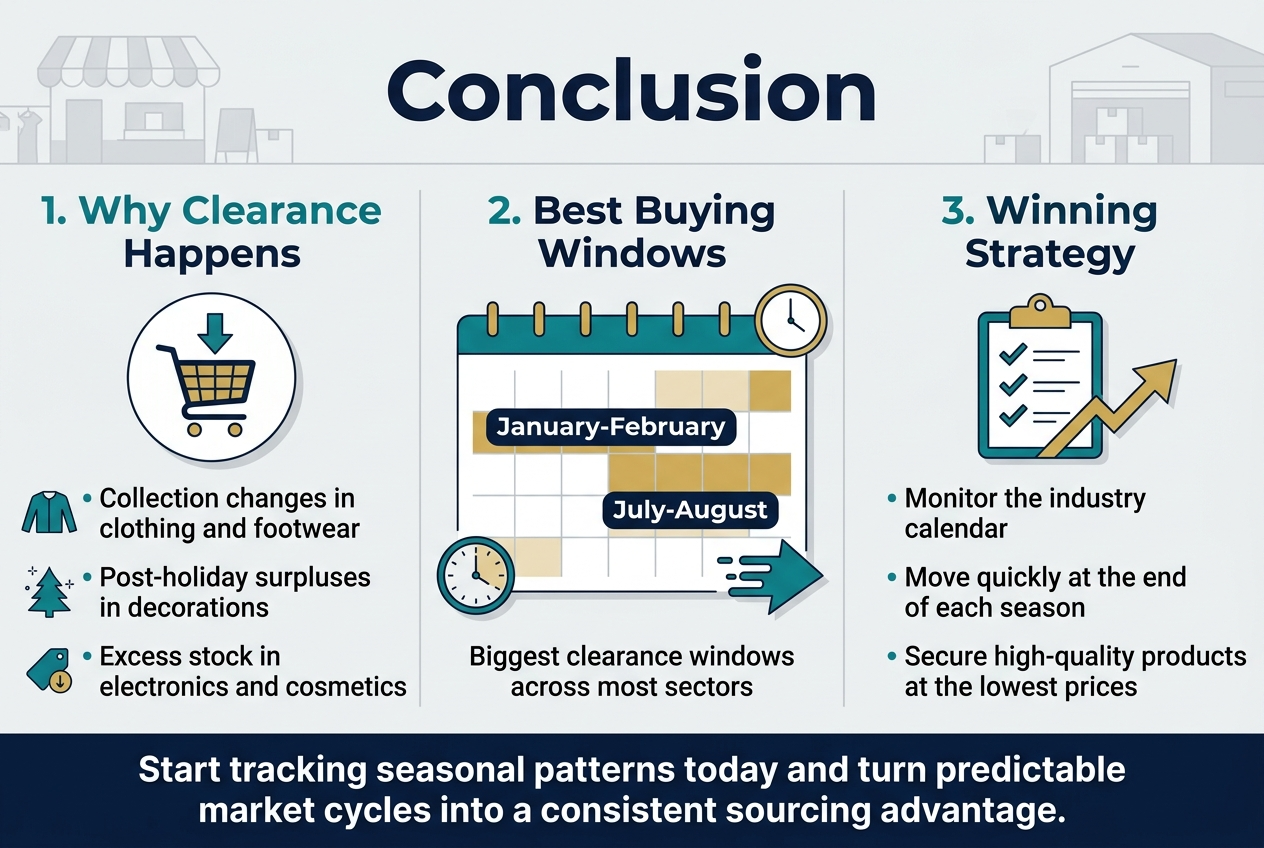
Wholesale seasonal clearance stock offer a reliable and profitable opportunity for wholesalers who know when and what to buy. By understanding why these sales happen — from collection changes in clothing and footwear to post-holiday surpluses in decorations, electronics, and cosmetics — buyers can anticipate the market and act at exactly the right moment. The key is recognizing that these cycles are regular and predictable, which makes advance planning not just possible, but essential.
The most successful approach combines industry knowledge with a clear purchasing strategy. Knowing that the biggest clearance windows typically fall in January-February and July-August across most sectors gives wholesalers a significant advantage. By monitoring the industry calendar and moving quickly at the end of each season, you can secure high-quality products at the lowest prices while keeping your inventory turning over efficiently. Start tracking seasonal patterns in your industry today, and turn predictable market cycles into a consistent sourcing advantage.