Blog
Cosmetics Expiration Dates: Cut Inspection Load for Pallet Resellers

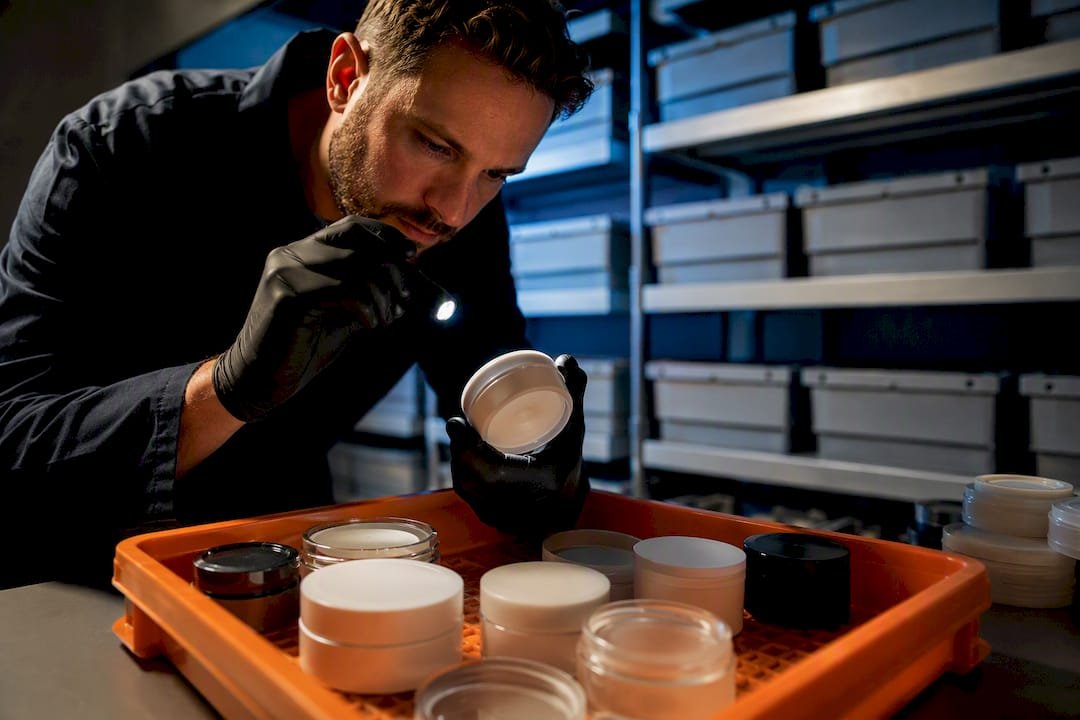
Reselling cosmetics from liquidation pallets is legal, but selling adulterated or misbranded units is not, and that distinction rests entirely on your inspection process. The FDA does not require printed expiration dates on most cosmetics, so a missing date is not a red flag on its own. The moment you receive a pallet, check tamper seals, photograph batch codes, and pull aside anything opened, damaged, or unlabeled. When you can’t verify a unit’s condition, don’t list it. Document it and hold it for return or destruction.
TL;DR:
- Focus on thorough visual inspections at both pallet and unit levels to accurately identify damaged, opened, or unlabeled cosmetics before resale.
- Use batch codes to verify manufacturing dates and assess product freshness, especially since many brands omit printed expiration dates.
- Prioritize sourcing from suppliers who pre-sort inventory by condition to reduce inspection time, costs, and the risk of reselling unsafe or misbranded units.
- Maintain detailed records of batch codes, condition notes, and inspection steps to defend against legal liability and customer disputes.
- Be aware that sunscreens and OTC drug-classified personal care items require printed expiration dates, and missing dates on these lead to clear regulatory violations.
Table of Contents
- How Do You Inspect a Cosmetics Pallet for Expiration Risk?
- What Legal Risks Do Resellers Face Under FDA Rules?
- How Do You Decode Batch Codes When Expiration Dates Are Missing?
- What Storage Conditions Affect Whether Cosmetics Stay Sellable?
- How Should You Label and Disclose Condition When Reselling?
- Do State Laws Add Stricter Rules Beyond Federal Guidance?
- What’s the Safest Way to Dispose of Expired Cosmetics?
- What’s a Realistic Shelf Life for Common Cosmetic Categories?
- Which Products Legally Require Printed Expiration Dates?
- Publisher Perspective: Reducing Expiry Risk From the Source
- Why Megapalletsliquidation’s Cosmetics Pallets Reduce Your Inspection Load
- Sources
- FAQ
How Do You Inspect a Cosmetics Pallet for Expiration Risk?
A cosmetics pallet needs two layers of screening: one at the pallet level, one item by item. Skipping either step is how resellers end up with disputes, returns, or worse, a misbranding complaint.
Start broad, then narrow in:
- Inspect the outer packaging. Look for water stains, crushed corners, heat warping, or a smell that suggests something leaked in transit.
- Check for mixed sourcing. Pallets combining multiple countries of origin or commingled lots deserve extra scrutiny, since labeling standards and batch coding formats can differ.
- Open individual units carefully. Confirm the shrink band or seal is intact before you touch the applicator or cap.
- Verify the label panel. The ingredient list and net quantity should be legible and complete, per federal labeling requirements.
- Look for use evidence. Broken applicators, dried product on a nozzle, or a low fill line all suggest the item was opened before it reached you.
Once a unit passes visual inspection, log it. Every item needs a photo of its batch code and label, plus a spreadsheet or inventory app entry tracking SKU, batch code, decoded date (if available), and condition notes. This record becomes your evidence trail if a buyer ever disputes freshness.
Sort each unit into one of four outcomes: full-price sale, discounted sale with clear condition disclosure, hold for further testing, or destroy.
- Sealed, undamaged, clearly labeled → sell at full price.
- Sealed but nearing the end of typical shelf life → discount with disclosed condition.
- Ambiguous batch code or packaging concern → hold.
- Broken seal, contamination signs, or missing label info → destroy.
Pro Tip: Photograph every batch code against a ruler or coin for scale. It sounds excessive until you’re decoding a blurry image six months later trying to prove a return claim was wrong.
What Legal Risks Do Resellers Face Under FDA Rules?
Manufacturers, not resellers, bear the responsibility for determining a cosmetic’s shelf life and safety. That doesn’t shield you if you knowingly sell something you shouldn’t. The FD&C Act makes it illegal to sell adulterated or misbranded cosmetics, and both terms cover situations that come up constantly in liquidation inventory.
Common triggers include:
- Selling a product with a broken seal or visible contamination.
- Selling a unit missing its ingredient panel or net quantity statement.
- Repackaging or relabeling in a way that misrepresents the product’s condition or brand claims.
MoCRA expanded FDA’s enforcement posture around cosmetics, and while the agency still generally relies on voluntary recalls rather than mandatory pull orders, that doesn’t mean enforcement risk is low. A retailer caught distributing tampered or contaminated units can face liability independent of what the manufacturer did or didn’t disclose.
The practical defense is recordkeeping: inspection logs, timestamped photos, batch-code records, and a consistent disclosure practice for every listing. If a dispute ever arises, a documented process is worth more than a good explanation after the fact.
How Do You Decode Batch Codes When Expiration Dates Are Missing?
A batch code tells you when a product was manufactured. It rarely tells you when it expires, and that gap trips up a lot of new resellers. Many established brands skip printed expiry dates entirely because their formulas pass multi-year stability testing, which means an undated jar isn’t automatically old, just unlabeled.
A workable decoding routine looks like this:
- Photograph the code clearly, including any embossed or laser-etched marks that are easy to miss under store lighting.
- Run the code through more than one online batch decoder, since coverage varies by brand and manufacturing region.
- Check the brand’s own website or contact customer support directly when a decoder returns nothing or conflicting results.
- Cross-reference the decoded date against the item’s physical condition. A “fresh” code on a separated or discolored product is a red flag, not a green light.
Batch codes aren’t standardized industry-wide. Some brands use internal strings that only their own customer service team can interpret, and coding formats sometimes change between product lines within the same company. Treat an undecodable code on a sensitive category, like eye or lip products, as a reason to hold rather than list.
Pro Tip: If two decoders disagree by more than a season, don’t average the results. Treat the item as unverified and price or hold it accordingly.
What Storage Conditions Affect Whether Cosmetics Stay Sellable?
Heat, humidity, and light degrade cosmetics faster than time alone. A pallet stored in a hot trailer for two weeks can carry more risk than a pallet that sat on a cool shelf for six months. Watch for separation in liquid foundations, a rancid or sour smell in creams, color shifts in powders, or a change in texture in anything oil based.
Some categories tolerate rough handling better than others:
- Higher risk: liquid foundations, cream products, mascaras, sunscreens, and anything in a pump or tube.
- Lower risk: pressed powders, bar soaps, and sealed compacts, which resist environmental damage much longer.
When a new pallet arrives, quarantine it in a climate-controlled area before inspection, rather than leaving it in a garage or uninsulated storage unit. Tag units by condition as you sort, so “full price,” “clearance,” and “hold” inventory never sit in the same bin. A general storage-and-shelf-life reference from outside the cosmetics category still illustrates the same point: environment, not just elapsed time, drives most product degradation.
Pro Tip: A quick sniff test catches more spoiled cream and lotion product than a visual check ever will. Train your team to smell before they list.

How Should You Label and Disclose Condition When Reselling?
Preserve the principal display panel whenever possible: ingredient list, net quantity, and responsible firm statement all need to stay legible under federal labeling rules. Stripping or damaging that panel during handling turns a sellable item into a liability.
If you’re selling in lots or repackaging bundles, disclose condition plainly and attach photos showing seals and batch codes as they existed at receipt.
- State facts, not marketing claims. “Sealed, batch code decoded to a 2025 manufacture date” beats “hypoallergenic” or “dermatologist tested” claims you can’t verify.
- Note any cosmetic (not safety) flaws, like a scuffed box or missing outer cellophane.
- Include the decoded manufacture date when available, and say clearly when it isn’t.
A short listing line like “New, sealed, batch verified, manufactured [month/year]” resolves most buyer disputes before they start.
Do State Laws Add Stricter Rules Beyond Federal Guidance?
Federal rules set the floor, not the ceiling. Several states enforce their own consumer protection and cosmetics labeling statutes that go further than FDA baseline requirements, particularly around disclosure to end buyers and penalties for selling used or tampered personal care items.
California’s consumer protection statutes, for instance, have historically supported stricter enforcement against sellers of used or reconditioned personal care products, and several states maintain their own deceptive trade practices acts that can apply to cosmetics resale even when federal law is silent on a specific point. Some state attorneys general have pursued cases against secondhand cosmetics sellers using general consumer fraud statutes rather than cosmetics-specific rules, which means a technically FDA-compliant listing can still trigger a state-level complaint if disclosure is thin.
The practical takeaway for a multi-state reseller: check your home state’s consumer protection and secondhand goods statutes separately from federal cosmetics rules, and don’t assume FDA compliance is a complete shield. If you sell across state lines through an online marketplace, the buyer’s state law may govern the transaction, not just your own. Building a disclosure habit that exceeds federal minimums, clear condition notes, visible seal photos, decoded batch dates, protects you against the state-level gap federal guidance doesn’t cover.
What’s the Safest Way to Dispose of Expired Cosmetics?
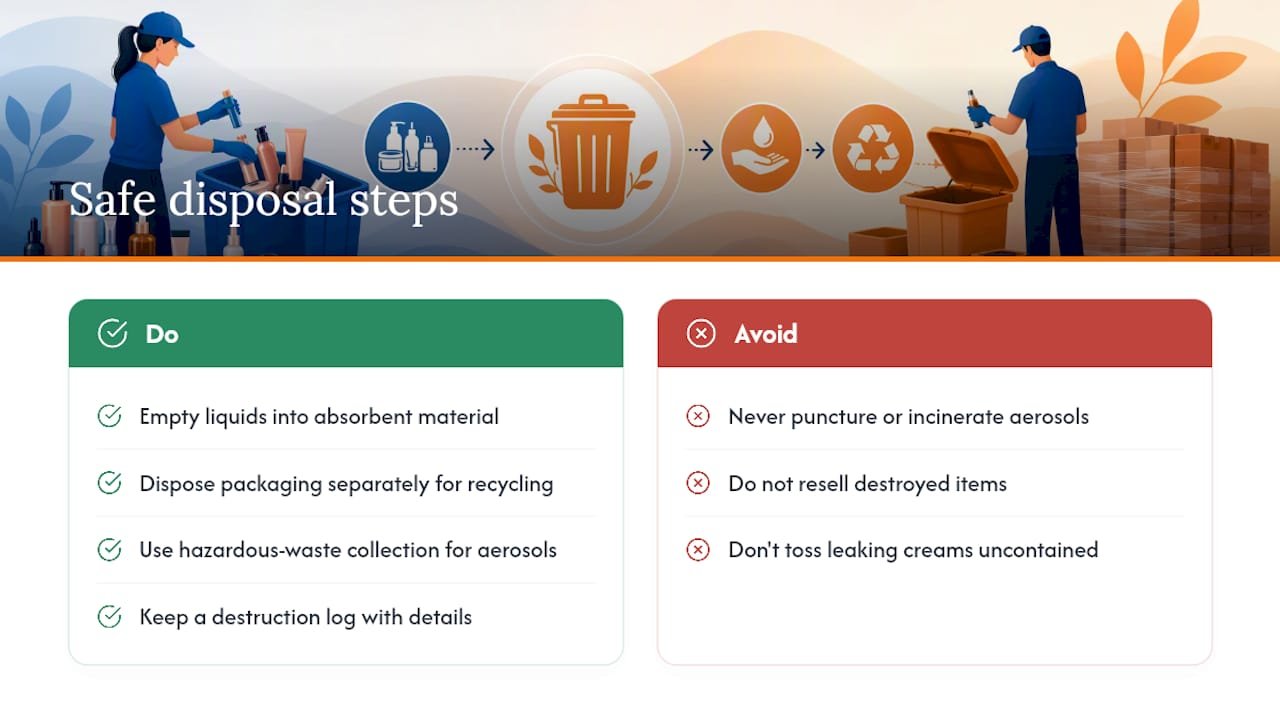
Items you can’t verify or that show clear spoilage signs shouldn’t go in a regular trash bin without some basic precautions, especially in bulk. Liquid and cream products can leak and contaminate other waste, and aerosol items like some setting sprays need separate handling due to pressurized contents.
For most non-aerosol cosmetics, the standard approach is straightforward: empty remaining product into an absorbent material like cat litter or sawdust before discarding the container, then dispose of packaging separately for recycling where local rules allow. Aerosol products should never be punctured or incinerated. Check with your municipal waste program, since some require aerosols to go through a hazardous household waste collection rather than curbside pickup.
For sizable pallet-scale destruction, some resellers coordinate with local waste management services that handle bulk personal care disposal, particularly when dealing with damaged or contaminated units in volume. Keeping a destruction log, date, quantity, batch codes, reason for disposal, gives you the same paper trail that protects you in an inspection scenario. It also closes the loop on your inventory tracking, so a “hold” item doesn’t quietly disappear without a record of why.
Never resell anything you’ve pulled for destruction, even at clearance pricing. The point of the hold-or-destroy decision is that the item failed your safety bar, not that it needs a lower price tag.
What’s a Realistic Shelf Life for Common Cosmetic Categories?
When a printed date is missing, you need a working estimate to guide your discount and hold decisions. These are general industry ranges, not guarantees, since actual stability depends on formula and storage history.
| Category | Typical unopened shelf life | Degradation signs to watch |
|---|---|---|
| Pressed powders, eyeshadows | typically a few years | Cracking, color shift |
| Lipsticks, lip liners | typically a few years | Waxy separation, smell change |
| Liquid foundation | typically one to two years | Separation, altered scent |
| Mascara, liquid eyeliner | typically one to two years | Drying out, clumping, smell |
| Cream products, lotions | typically one to two years | Rancid smell, texture change |
| Nail polish | typically one to two years | Thickening, separation |
| Bar soap, solid products | can last several years | Rarely degrades meaningfully |
These ranges assume unopened, properly stored units. A pallet that spent time in a hot warehouse can shorten every one of these windows, sometimes significantly for liquid and cream products.
Which Products Legally Require Printed Expiration Dates?
Sunscreens are the major exception to the general cosmetics rule, because the FDA regulates them as over-the-counter drugs rather than standard cosmetics. That classification means sunscreens require printed expiration dates or supporting stability data, and a sunscreen without one is a labeling violation, not just a gap.
The same drug classification applies to other OTC personal care items that make a drug claim: anti-dandruff shampoos, acne treatments with active ingredients, and some anti-aging products marketed with a specific therapeutic claim rather than a cosmetic one. If a product’s label makes a claim about treating, preventing, or altering a body function, it’s likely regulated as a drug and carries stricter dating and stability requirements than a standard cosmetic.
For resellers, this means sunscreen pallets and any drug-classified personal care items need a different inspection standard than your typical eyeshadow or lipstick lot. Missing or illegible expiration dates on these categories are not a gray area; they’re a clear reason to pull the item from resale. Treat any pallet mixing standard cosmetics with sunscreen or OTC drug products as two separate inspection workflows, not one.
Publisher Perspective: Reducing Expiry Risk From the Source
Most guidance on cosmetics resale stops at “inspect carefully,” which is true but incomplete. The bigger lever is sourcing from suppliers who already sort for condition before the pallet ever reaches your dock. Megapalletsliquidation works across multiple merchandise categories, including a dedicated cosmetics pallet line that spans everything from mixed-brand lots to curated high-end selections. That upstream sorting doesn’t replace your own inspection process, but it does shrink the volume of guesswork you’re doing on batch codes and seals for every single unit. Resellers who pair disciplined receiving inspection with better-sourced pallets consistently spend less time on holds and destructions, and more time actually listing inventory.
— Nene
Why Megapalletsliquidation’s Cosmetics Pallets Reduce Your Inspection Load
The fastest way to cut your resale risk isn’t a better spreadsheet, it’s starting with cleaner inventory. Megapalletsliquidation’s Cosmetic Pallets come sourced from customer returns, overstock, and closeout channels with condition context built into the listing, so you spend less time guessing and more time selling.
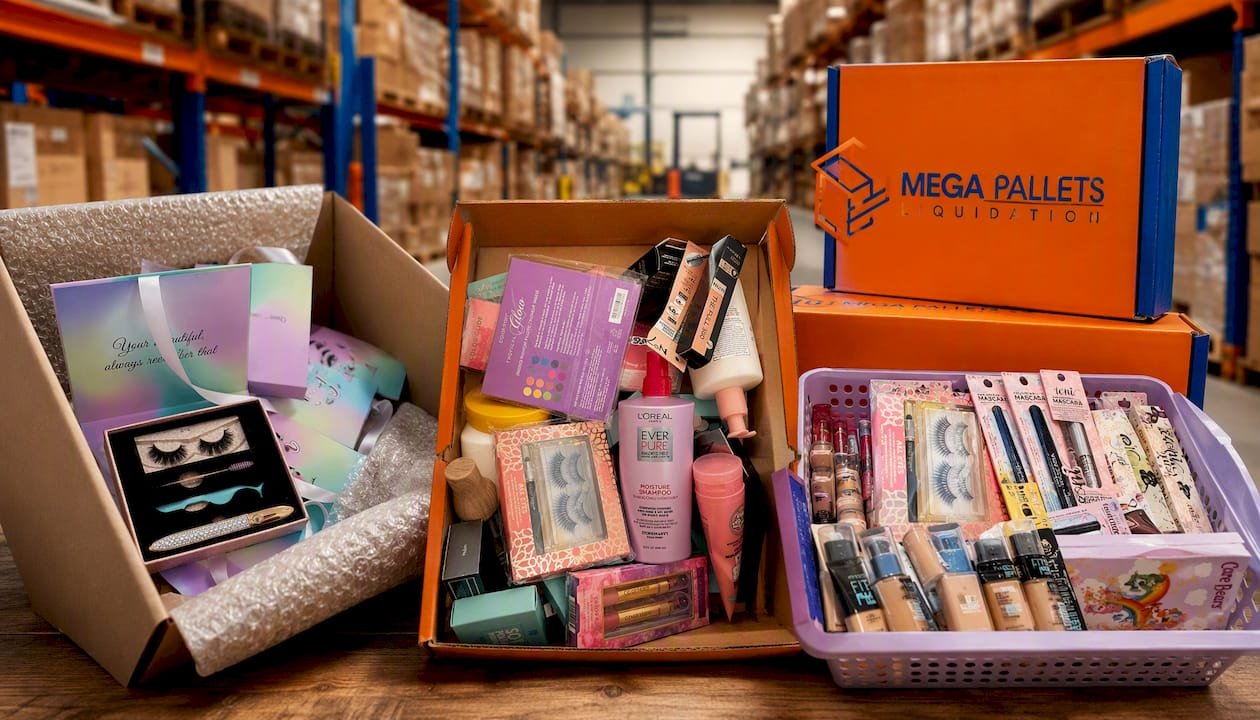
If you’re testing the waters or want variety across price points, the Buy Makeup Mystery Box Pallets option gives you five mystery boxes per pallet, a lower-commitment way to diversify your resale mix without buying five separate lots. For resellers targeting a premium customer base, the High End Brands Makeup Pallet concentrates inventory value into fewer, higher-ticket units, which typically means less per-item inspection time relative to your total resale value.
Every pallet ships with nationwide delivery and secure payment processing, and if what arrives falls outside acceptable tolerance, the returns and refund policy covers your next step. Check current cosmetics listings and condition notes on pallet pages before placing an order.
Sources
- Shelf life and expiration dating of cosmetics | FDA
- FDA recall authority and cosmetics — CRS primer (excerpt)
FAQ
Is It Legal to Resell Cosmetics From Liquidation Pallets?
Yes, reselling cosmetics is legal, but selling items that are adulterated or misbranded, including opened, contaminated, or improperly labeled units, is not.
Do Cosmetics Legally Need a Printed Expiration Date?
Most cosmetics don’t require one under FDA rules, but sunscreens and other OTC drug-classified products do require printed dates or stability data.
How Do I Estimate Shelf Life When There’s No Printed Date?
Use the batch code to find a manufacture date, then apply typical category ranges, roughly one to three years depending on the product type, while checking for visible spoilage signs like separation or odor change.
What Should I Do With Damaged or Unverifiable Units?
Segregate them immediately, log the batch code and condition with photos, and hold them for further testing or documented destruction rather than listing them at a discount.