Blog
What Liftgate Delivery Meaning for Freight and Pallet Orders

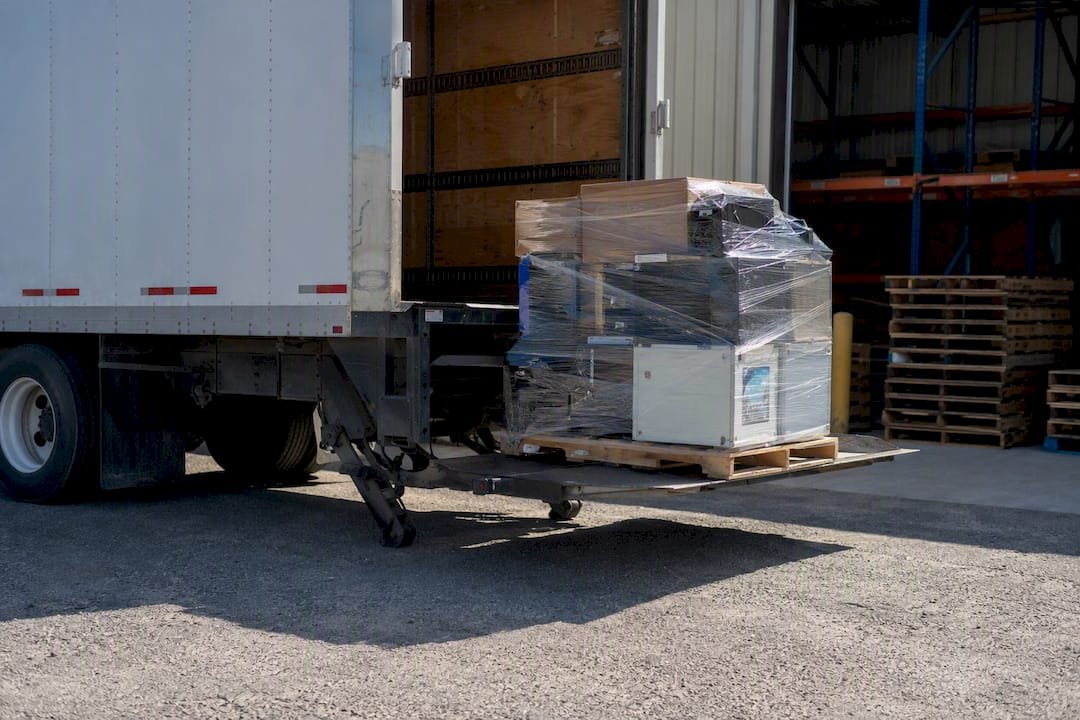
Liftgate Delivery Meaning refers to a freight delivery service that uses a hydraulic or electric rear-mounted platform to raise or lower freight between the truck bed and the ground. It typically ends there. The driver lowers your shipment to the curb or driveway, but moving it into a garage, storefront, or warehouse falls under a separate “inside delivery” service.
Understanding the Liftgate Delivery Meaning is especially important when ordering heavy pallets or liquidation inventory because a standard freight truck may not have equipment to unload a pallet safely at ground level.
Two numbers matter most: standard trailer beds sit 48 to 52 inches off the ground, which is exactly the gap a liftgate is built to bridge, and pallet suppliers like Megapalletsliquidation can build liftgate requests directly into their shipping process.
- Liftgate = ground-level transfer only
- Inside delivery = a separate, additional service
- 48 to 52 inches = the typical gap the platform closes
Knowing the Liftgate Delivery Meaning before placing a freight order can help you avoid unexpected unloading problems and additional delivery charges.
Key Takeaways
The Liftgate Delivery Meaning is simple: liftgate delivery gets freight from the truck bed to the ground safely; it does not include moving freight inside your building unless you book that separately. If you’re ordering pallets for resale, confirm whether liftgate service is included before arranging shipment.
| Point | Details |
|---|---|
| Liftgate defined | A hydraulic or electric platform bridges the 48 to 52 inch gap between a trailer bed and the ground. |
| Service boundary | Drivers generally stop at the curb; inside delivery or white-glove service is a separate paid add-on. |
| Cost structure | Liftgate is billed as an accessorial fee, often with residential charges added as a separate line item. |
| Booking timing | Request liftgate at the quote stage to avoid re-delivery fees that can exceed the original charge. |
| Order with Megapalletsliquidation | Add liftgate and site-access notes at checkout, including on LWS GM Truckload orders, for smoother first-attempt delivery. |
What Is a Liftgate and Why Do Carriers Use It?
Liftgate Delivery Meaning is easiest to understand by looking at the equipment itself. A liftgate is a mechanical platform bolted to the rear of a delivery truck, operated by a switch box or handheld remote. When not in use, it folds flat against the truck and extends level with the truck bed when needed.
The mechanism is straightforward: hydraulic or electric pumps move the platform up and down, closing the gap between a trailer floor sitting 48 to 52 inches off the ground and the surface where the freight needs to be placed.
Understanding the Liftgate Delivery Meaning is particularly useful when ordering heavy pallets, liquidation inventory, or other freight without access to a loading dock.
Carriers install liftgates for three main reasons:
- Safety — lifting a 1,000-pound pallet by hand invites injury; a liftgate does the heavy lifting.
- Damage control — freight that gets dropped, dragged, or wedged during manual unloading is more likely to be damaged, returned, or refunded.
- Reach — a liftgate makes a curb, driveway, or suitable gravel lot a viable delivery point when no loading dock is available.
Why Liftgate Capacity Matters
Platform capacity is another important part of understanding Liftgate Delivery Meaning. Most commercial liftgates can handle a few thousand pounds per load, but the exact capacity varies depending on the carrier, truck, and liftgate equipment.
Liftgates are particularly useful when no loading dock exists, which describes many homes, small shops, storage locations, and job sites. Before arranging delivery, confirm that the carrier’s liftgate capacity is sufficient for the weight of your pallet.
For pallet buyers, knowing the Liftgate Delivery Meaning ahead of time helps you choose the right freight service and avoid problems when your shipment arrives.
How Does Liftgate Delivery Work Step by Step?
Understanding the Liftgate Delivery Meaning becomes much easier when you know what actually happens when a liftgate-equipped truck arrives at your delivery location.
- The driver positions the truck as close to the delivery point as the driveway, curb, or lot allows.
- The liftgate unfolds and locks flat, level with the truck bed.
- Freight is moved onto the platform, usually with a pallet jack or manual placement, depending on pallet weight and truck layout.
- The driver operates the control switch to lower the platform smoothly to ground level.
- The freight is moved off the platform onto the curb, driveway, or suitable ground surface.
This process explains the practical Liftgate Delivery Meaning: the equipment helps transfer heavy freight from the elevated truck bed down to ground level when a loading dock isn’t available.
That last step is where most confusion starts. The driver’s job generally stops at the pavement. Carriers do not normally move freight inside a building unless you’ve separately booked and paid for inside delivery or white-glove service. If you assumed the liftgate driver would wheel your pallet into the garage, that assumption can become a major source of delivery-day frustration.
For anyone ordering liquidation pallets, understanding the Liftgate Delivery Meaning before shipment arrives can help you prepare the delivery area and avoid unexpected service charges.
Pro Tip: Have a pallet jack, dolly, or a couple of extra hands ready at your delivery site. The truck gets your freight to the ground. Getting it the last 20 feet into your building is generally on you unless you’ve paid for that service separately.
When Do You Actually Need Liftgate Delivery?
If your delivery address doesn’t have a loading dock or a forklift standing by, you almost certainly need liftgate service. This covers more locations than people expect:
- Residential addresses and home-based resale operations
- Small storefronts and strip-mall retail units
- Storage units and self-storage facilities
- Construction sites without dock infrastructure
- Warehouses or shops mid-renovation, temporarily without dock access
The shipment types that trigger this need most often are palletized freight, oversized furniture, heavy equipment, and anything bulky enough that two people can’t safely muscle it off a truck bed by hand.
There are situations where a liftgate can’t help, though. Low tree branches or carports can block the truck from getting close enough. Soft, muddy, or gravel-loose ground can make it unsafe to lower a loaded platform. And freight that exceeds the platform’s weight capacity simply won’t go down safely, no matter how badly you need it delivered today.
What Does Liftgate Delivery Cost?
Liftgate service is almost always billed as an accessorial fee, a charge added on top of standard freight cost rather than folded into it. Carriers commonly bill separately for liftgate use, and residential accessorial charges often stack on top of that as their own line item.
Price drivers include:
- Which carrier you’re using and their accessorial fee schedule
- Whether the stop is residential or commercial (residential typically costs more)
- Shipment weight and pallet count
- Regional supply and demand for freight service in your area
The real financial risk isn’t the fee itself. It’s skipping it. Booking liftgate at the time of quote costs far less than the alternative: a driver who arrives, can’t unload without one, and returns your freight to the terminal, triggering re-delivery charges that often exceed the original liftgate fee outright.
Site Prep and Safety Checklist for Liftgate Delivery
Before delivery day, walk your site with a tape measure. A liftgate truck needs room to maneuver, and tight urban driveways or narrow alley access can turn away a truck that would otherwise deliver without issue.
Check these before you finalize your order:
- Overhead clearance — trees, power lines, carports, and low awnings can block truck access entirely.
- Driveway width and surface — a liftgate lowering a loaded pallet onto soft gravel or mud is a safety risk carriers may decline to take.
- Turning radius — confirm a full-size delivery truck can actually enter and exit your street or lot.
- Platform capacity vs. pallet weight — measure your pallet’s footprint and total weight against what the carrier’s equipment can handle.
- Obstructions — move parked cars, trash bins, or landscaping equipment out of the delivery zone in advance.
Pro Tip: Take photos of your driveway and delivery area and describe them in your order notes. Carriers prioritize safety above all else and will refuse a drop if conditions look unsafe on arrival, which costs you both time and money.
How Do I Arrange Liftgate Delivery for a Pallet Order?
Booking liftgate correctly at the quote stage is the single best way to avoid a failed delivery. When you place an order through Megapalletsliquidation, follow this sequence:
- Select liftgate service during checkout and note “liftgate required” clearly in your order comments.
- Describe your site access: driveway width, any low clearance, preferred parking spot for the truck.
- Flag if you need inside delivery or white-glove handling, since that’s billed and scheduled separately from standard liftgate service.
- Review the shipping and delivery page for current policies before you finalize an order.
- Contact support directly if your site has unusual conditions, like a shared loading area or a gated community with restricted truck access.
A Reseller’s Take on Realistic Delivery Expectations
Buyers who expect white-glove treatment from standard liftgate service get burned. The fix is simple: book liftgate up front, describe your driveway honestly, and have a dolly ready at the curb.
— Nene
Order Pallets with Liftgate Delivery Built In
Megapalletsliquidation makes requesting liftgate service part of the order flow instead of an afterthought you scramble to fix after a failed delivery attempt. Buyers sourcing grocery pallets or general merchandise pallets can add site-access notes right at checkout, so the carrier knows about your driveway, clearance, or parking situation before the truck ever leaves the warehouse.
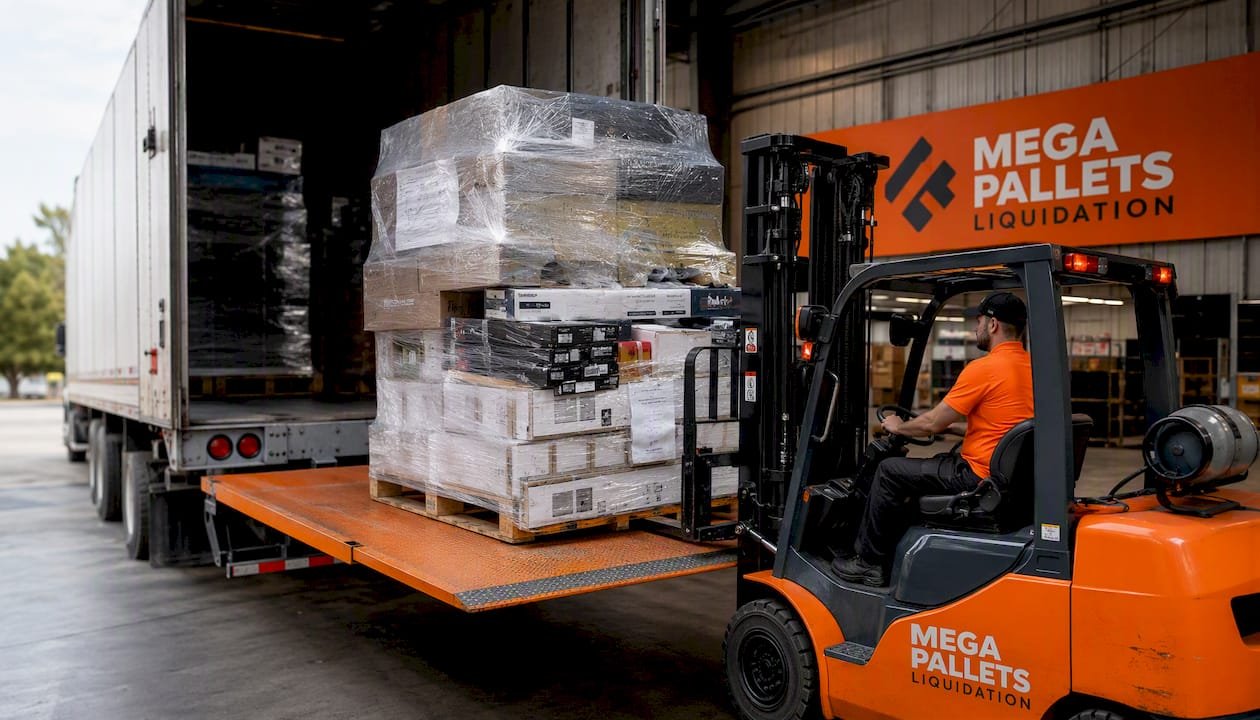
If you’re placing a bigger order, the LWS GM Truckload listing is built for buyers who need volume and want shipping details locked in ahead of time. Review the how to order page for a walkthrough of the checkout process, add your liftgate and delivery notes when you place your order, and reach out to support if your site has anything unusual to flag before the truck rolls out.
Sources
- What is Liftgate Delivery: Meaning, Shipping and Service
- Lift Gate Service: When You Need It for LTL Shipping
- What Does Lift Gate Service Mean and When Do You Need It?
- What is a Liftgate? Definition, How It Works, and Benefits – Inbound Logistics