Blog
U.S. Resellers: Register to Avoid Sales Tax on Liquidation Pallets

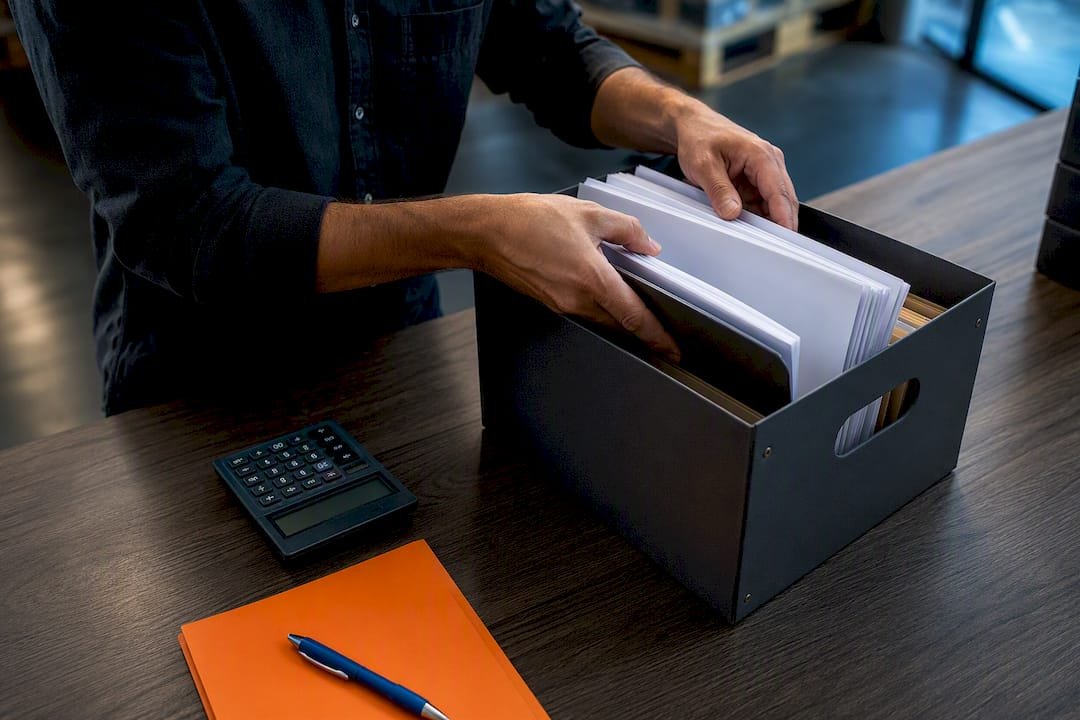
Resellers generally do not pay sales tax on liquidation pallets when they hand the seller a valid resale certificate and use the pallets for resale, not personal use. The exemption doesn’t erase the tax; it shifts collection to you, the reseller, when you sell to the end customer. Skip the certificate, misuse it, or sell in a state where you hold nexus without a permit, and you’re on the hook for tax, interest, or worse.
TL;DR:
- Resellers must have a valid resale certificate and seller’s permit before purchasing liquidation pallets tax-free to ensure exemption validity.
- Buying pallets for resale in one state does not exempt from sales tax if physical or economic nexus is established in another state where taxes are due.
- Misusing resale certificates for non-resale use or failing to maintain proper documentation can lead to unpaid tax, penalties, and interest.
- Liquidation platforms generally accept resale certificates, but verification delays or rejections can occur if documentation is incomplete or mismatched.
- Sales tax is applied to the goods on the pallet, not the pallet itself, with specific rules for pallet deposit fees varying by state.
Table of Contents
- How the Resale Exemption Applies to Liquidation Pallets
- How to Get a Resale Certificate and Seller’s Permit
- When Do You Need to Collect Sales Tax as a Reseller?
- Common Sales Tax Mistakes Resellers Make With Liquidation Pallets
- Do Liquidation Marketplaces Accept Resale Certificates?
- How Mega Pallets Liquidation Supports Compliant Buying
- Sales Tax Rates on Liquidation Pallets by State
- Taxability of Liquidation Pallets vs. Regular Inventory
- Exemptions and Exceptions Worth Knowing
- Selling Liquidation Pallet Inventory Across State Lines
- Are Pallets Themselves Taxed, or Just What’s On Them?
- My Take: The Compliance Checklist That Actually Matters
- Start Sourcing Compliant Pallets With Mega Pallets Liquidation
- Sources
How the Resale Exemption Applies to Liquidation Pallets
Every state that charges sales tax also recognizes a resale exemption, which means tax gets collected once, at the final retail sale, instead of at every step of the supply chain. When you buy a pallet of customer returns intending to resell each item, that purchase qualifies as “for resale,” and a valid resale certificate tells your supplier not to charge you tax on that transaction.
States look at intent and end use, not the condition of the goods. A pallet of damaged electronics, mismatched clothing, or shelf-pulled kitchen gear still qualifies for the exemption as long as you plan to sell it, whether piece by piece, in bundled lots, or through a storefront. What breaks the exemption is using inventory yourself, gifting it, or donating it without reporting the value.
Common scenarios where the exemption clearly applies:
- Buying a mixed-condition returns pallet you intend to sort and resell online
- Purchasing bulk closeout lots for a flea market booth or retail storefront
- Acquiring damaged-box inventory you plan to repair and flip
- Sourcing wholesale lots specifically to redistribute to other resellers
Suppliers can refuse a certificate, and sometimes should. Some states restrict resale certificates to specific product categories, and sellers may decline them if your certificate is expired, illegible, or was issued in a state where they have no obligation to accept it. A supplier who charges you tax anyway isn’t necessarily wrong; they may be following their own state’s verification policy.
How to Get a Resale Certificate and Seller’s Permit
You need a seller’s permit before you can legally issue a resale certificate, and the process is more mechanical than intimidating. Here’s the sequence most resellers follow:
- Register with your state’s tax authority. Apply for a seller’s permit (sometimes called a sales tax license) through your state’s department of revenue or comptroller’s office, providing your business name, EIN, and expected sales activity.
- Receive your permit number. Most states issue this within days for online applications; you’ll use this number on every resale certificate you present.
- Fill out the resale certificate. Use your state’s standard form or a multistate form like the Streamlined Sales Tax certificate, listing your permit number and a description of the goods you’re buying for resale.
- Decide between blanket and single-purchase certificates. A blanket certificate covers repeat purchases from the same supplier, while a single-purchase certificate applies to a one-time transaction. Blanket certificates save paperwork if you buy pallets regularly from one liquidator, though some states cap how long they stay valid.
- Upload or submit your certificate to each supplier. Liquidation marketplaces typically ask for this during account setup, verifying your permit number and business details before marking your account tax-exempt.
Pro Tip: Scan your resale certificate and permit as PDFs the day you receive them, and keep a dedicated folder labeled by state and year. When a marketplace or auditor asks for proof, you want it in thirty seconds, not thirty minutes.
Keep every certificate, invoice showing no tax was charged, and purchase confirmation for at least the length of your state’s audit window, often three to four years. That paper trail is your best defense if a state ever questions a transaction.
When Do You Need to Collect Sales Tax as a Reseller?
Buying pallets tax-free is only half the equation. Once you resell that inventory, nexus determines where you’re required to collect and remit tax.
Physical nexus exists when you have a tangible presence in a state: a warehouse storing pallets, a booth at a weekend trade show, or employees working from that state. Economic nexus exists purely from sales volume or transaction count, regardless of physical presence. The Wayfair decision authorized states to set these thresholds, and most states now trigger economic nexus based on sales volume or transaction count thresholds that vary by state, though the exact numbers vary by state.
Marketplace facilitator laws complicate this further. If you sell through a platform like Amazon or eBay, the platform itself often collects and remits sales tax on your behalf for those transactions. That doesn’t erase your obligations elsewhere; if you also sell through your own website or in person, you still need to register and collect tax in states where you’ve crossed a nexus threshold outside the marketplace.
A quick nexus checklist before you expand into new states:
- Do you store inventory (including liquidation pallets) in a warehouse there?
- Have you sold at a trade show, pop-up, or flea market in that state?
- Have your sales into that state crossed its economic nexus threshold?
- Are you selling through a channel that isn’t a marketplace facilitator?
Answer yes to any of these, and you likely need a seller’s permit in that state.
Common Sales Tax Mistakes Resellers Make With Liquidation Pallets
Most compliance headaches trace back to a handful of predictable errors, and nearly all of them are avoidable with better habits at purchase and sale.
Use tax on personal or promotional use. Pull an item from a pallet to keep, gift, or use as a demo, and you owe use tax on it, calculated on your original purchase price. Treat that pull as a taxable event and report it, even though no cash register transaction occurred.
- Paying tax at checkout because your certificate wasn’t uploaded or had expired
- Claiming the exemption on packaging, shelving, or supplies that aren’t inventory for resale
- Assuming every state treats returns pallets the same way, when some carve out exceptions for specific goods
- Ignoring state-specific quirks like environmental or disposal fees tacked onto certain product categories
Statistic to know: misusing a resale certificate for goods you don’t actually resell can trigger unpaid tax, interest, and statutory penalties that often run well beyond the original tax bill. Auditors don’t just want the tax back; they price in the risk you took.
Do Liquidation Marketplaces Accept Resale Certificates?
Most major liquidation platforms do accept resale certificates, but the workflow and turnaround time vary by seller. Here’s what to expect and how to handle friction:
- Create your account first. Most platforms require a verified business account before you can upload tax documents.
- Upload your resale certificate during setup. Platforms typically ask for your permit number, state of issue, and a signed certificate, and verification can take a few business days.
- Confirm your billing address matches your registered state. Mismatches are a common reason certificates get rejected or flagged for manual review.
- If a seller charges tax anyway, ask for a refund and document the attempt. Save your upload confirmation email and any correspondence; most sellers will credit the tax back once your certificate clears.
Out-of-state sellers add a wrinkle: they may require a certificate valid in their state specifically, not just your home state, especially if state rules restrict multistate acceptance.
How Mega Pallets Liquidation Supports Compliant Buying
Megapalletsliquidation was built for resellers who need bulk inventory without a tax headache attached to every order. The company sources wholesale liquidation pallets across categories that matter to working resellers, and its purchasing flow is designed so your resale documentation travels with your account, not your individual orders.
Here’s what that looks like in practice:
- Diverse product categories including Amazon Return Pallets, Electronics, Clothing, Cosmetics, Tools, Kitchen Appliances, Phones, Shoes, Toys, and pallets sourced from Target, Lowe’s, and Bed Bath & Beyond
- A streamlined purchasing process with secure payments and nationwide shipping
- Organized categories that make it easier to match inventory to your resale niche
To buy tax-free through the shop, create your account, upload your resale certificate during setup, and select the pallet category that fits your business before checkout.
Sales Tax Rates on Liquidation Pallets by State
There’s no separate “liquidation pallet tax rate.” Pallets get taxed under the same general sales tax rules as any other tangible goods in the state where the sale happens, once they reach a non-exempt buyer. What varies is the base rate and how aggressively a state polices resale certificates.
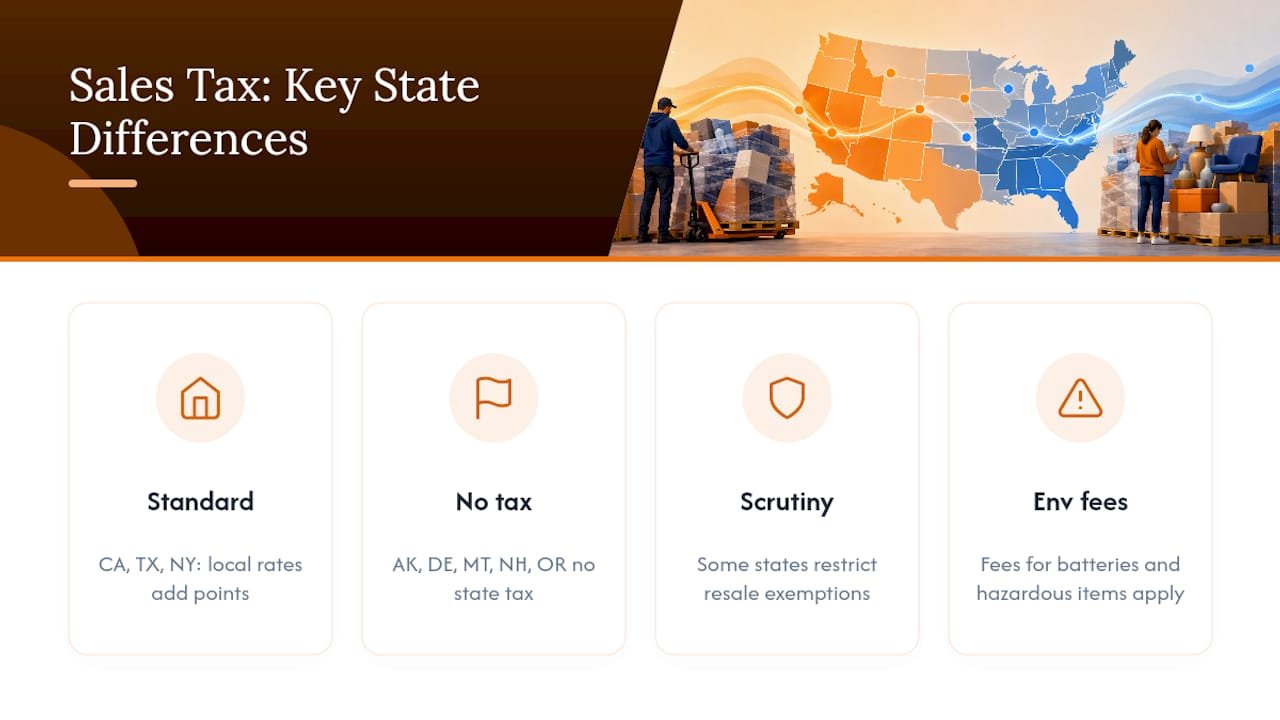
States like California, Texas, and New York apply standard statewide sales tax rates to retail sales of pallet contents, layered with local county and city rates that can push the effective rate several points higher depending on the ZIP code. Five states, Alaska, Delaware, Montana, New Hampshire, and Oregon, have no statewide sales tax at all, though Alaska allows local jurisdictions to charge their own.
A handful of states apply stricter scrutiny to resale certificates for specific goods, sometimes excluding categories like vehicles or certain regulated items from the resale exemption entirely. If you’re buying pallets that include electronics with embedded batteries or hazardous materials, check whether your state tacks on an environmental handling fee separate from sales tax; several states do, and it applies regardless of resale status.
The practical takeaway: your resale exemption travels with you at purchase, but the rate you eventually charge your customer depends entirely on where that customer is located and what your nexus footprint looks like there.
Taxability of Liquidation Pallets vs. Regular Inventory
There’s no legal distinction between a liquidation pallet and any other wholesale inventory purchase for sales tax purposes. States tax the transaction based on the nature of the goods and the buyer’s intent, not the supply chain the goods traveled through to get to you.
A pallet of Amazon customer returns, a case of overstocked kitchen appliances bought direct from a manufacturer, and a truckload of closeout inventory from a big-box retailer are all treated identically under resale exemption rules. What determines taxability is whether you’re the final consumer or an intermediary planning to resell.
Where confusion creeps in is mixed-use pallets. If a liquidation lot includes a mix of resalable merchandise and items you intend to keep, repurpose, or use as business supplies, only the resale-bound portion qualifies for the exemption. You’d owe use tax on the rest, calculated at the price you paid, not the retail value. Documenting that split at the time of purchase, even a simple spreadsheet estimating percentage-for-resale, gives you a defensible position if a state ever asks.
Exemptions and Exceptions Worth Knowing
Beyond the standard resale exemption, a few adjacent exceptions come up often enough for pallet resellers to keep on their radar.
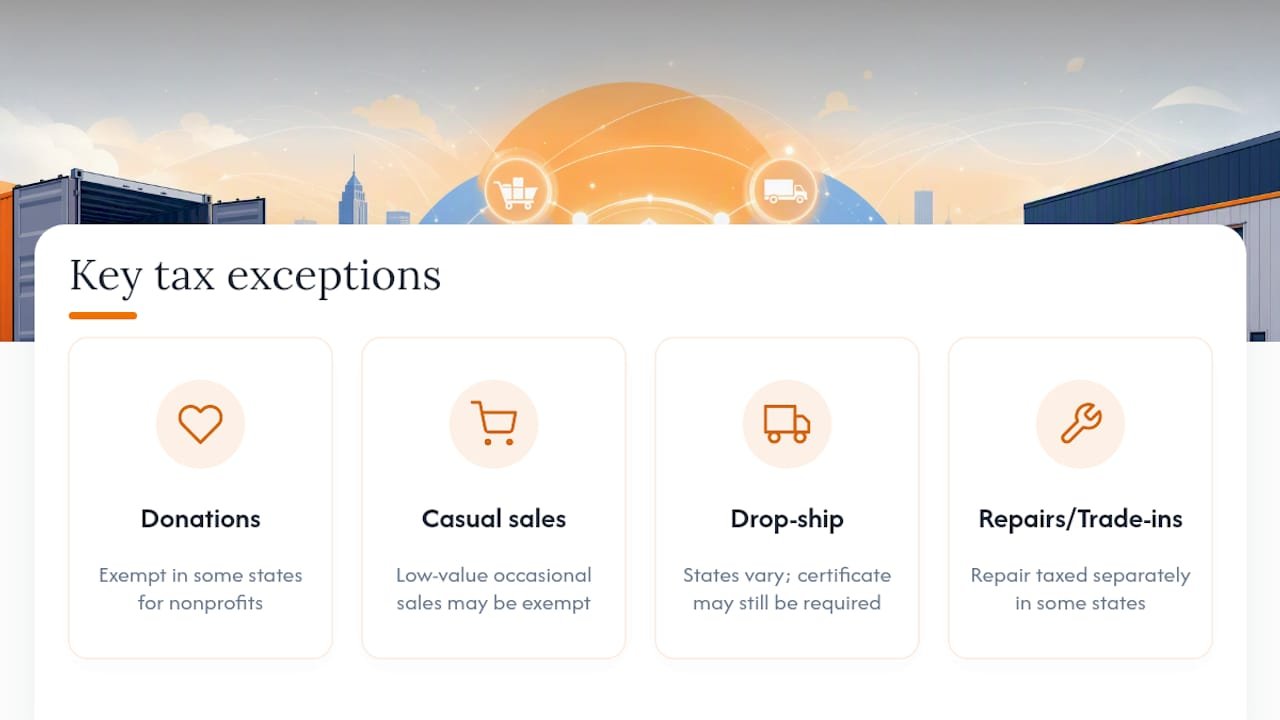
Some states offer exemptions for goods purchased specifically for donation to qualified nonprofits, separate from the resale exemption, which can matter if you’re liquidating unsellable pallet remainders. Others carve out exceptions for occasional or casual sales below a certain dollar threshold, though this rarely applies to anyone running pallets as an actual business.
A less obvious exception involves drop-shipped resale transactions, where you never physically touch the inventory. Some states still require a valid resale certificate from you even though the liquidator ships directly to your customer, while a few states have specific drop-shipment resale rules that differ from standard resale exemption requirements. If your model includes drop-shipping pallet contents, it’s worth confirming your target states’ specific stance rather than assuming standard rules apply.
Trade-in and repair exceptions also surface occasionally: if you refurbish items from a pallet and the repair itself is taxed separately from the resale of the item, that’s a distinct transaction with its own rules in several states.
Selling Liquidation Pallet Inventory Across State Lines
Once you resell pallet inventory to buyers in other states, your obligations hinge on nexus, not on where you originally bought the pallets. Buying from a liquidator in Ohio and shipping to customers in Florida doesn’t create Florida nexus by itself; what creates nexus is storing inventory there, hitting that state’s economic threshold, or maintaining some physical presence.
If you sell through a marketplace facilitator, the platform typically collects and remits tax on marketplace transactions automatically, even across state lines, which removes a layer of complexity for that specific channel. Sell the same inventory through your own website or at in-person events in another state, and that marketplace collection doesn’t cover you there.
Track your total sales by state, not just your total revenue. A reseller doing modest volume nationally can still trip an economic nexus threshold in a single high-volume state without realizing it, since thresholds are calculated per state, not in aggregate. Set a calendar reminder to review your state-by-state sales numbers quarterly if you’re selling pallet inventory in more than a handful of states; it’s the cheapest insurance against an unexpected registration requirement.
Are Pallets Themselves Taxed, or Just What’s On Them?
Sales tax applies to the merchandise, not the wooden or plastic pallet used to transport it. When you buy a “liquidation pallet,” you’re taxed (or exempted) based on the value and category of the goods loaded onto it, not the physical pallet structure itself.
That said, some suppliers itemize a pallet deposit or handling fee separately on the invoice, and whether that specific line item is taxable depends on state rules around packaging materials and shipping charges. A handful of states treat pallet deposits as nontaxable when the pallet is returnable, similar to how bottle deposits work in states with container return laws. If your invoice breaks out a pallet fee, it’s worth checking your state’s treatment of that specific charge, but it’s a minor line item compared to the tax treatment of the goods themselves.
My Take: The Compliance Checklist That Actually Matters
Cutting through the noise, here’s what keeps a pallet reseller out of trouble: register for a seller’s permit before you buy your first pallet, get a resale certificate on file with every supplier, upload it wherever the platform allows, and keep dated records of every purchase and sale. Track where you’re shipping and watch your nexus thresholds state by state, then collect and remit tax accordingly.
Where I’d stop winging it and call a tax professional: once you’re selling in more than three or four states, once volume climbs past six figures annually, or once your inventory mix includes repairs, refurbishments, or drop-shipping. Those situations create tax questions that generic guidance, including this article, can’t fully resolve for your specific setup.
— Nene
Start Sourcing Compliant Pallets With Mega Pallets Liquidation
Megapalletsliquidation gives resellers a straightforward path to bulk inventory that fits directly into the compliance workflow covered above: register, upload your resale certificate, and shop by category without chasing down a dozen separate suppliers.
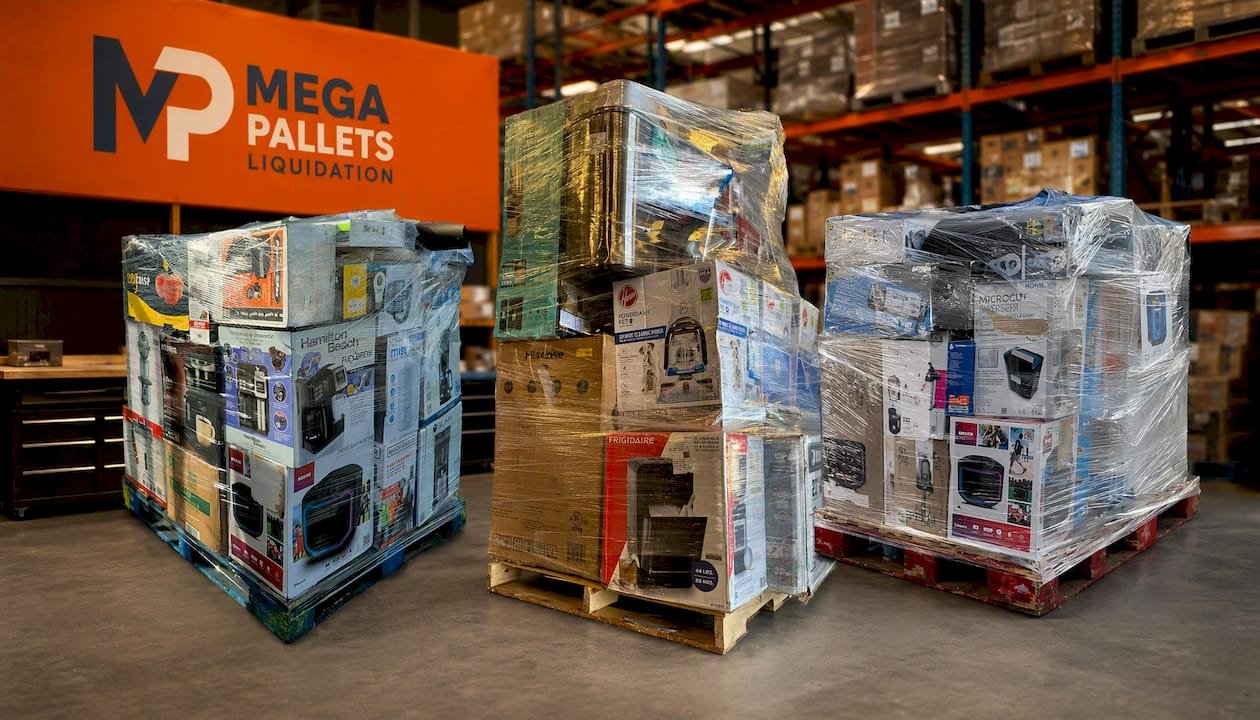
Three categories worth starting with: Mixed Electronic Pallets for resellers wanting diversified high-value electronics in one lot, Amazon Bulk Liquidation Pallets for wholesale-scale sourcing, and Amazon Electronic Return Pallets for buyers targeting higher-ticket returned inventory.
Create your account, upload your resale certificate during setup, and browse the full pallet shop to find the category that matches your resale business. Questions about bulk orders or certificate verification? Reach out before you buy, and get your paperwork squared away from day one.
Sources
- Understanding sales tax in the reselling industries | Wolters Kluwer
- Do Resellers Pay Sales Tax? Exemptions and When They Do – LegalClarity
- Resalecertificate
- South Dakota v. Wayfair, Inc. — U.S. Supreme Court opinion